In pharmaceutical packaging, label waste is more than a minor material issue. For manufacturers producing penicillin and other pharmaceutical products at scale, even a small amount of unnecessary label consumption can accumulate into significant costs over time. Label waste can also indicate deeper problems with machine adjustment, product positioning, label design, changeover procedures, or production management.
A properly configured penicillin bottle labeling machine can help pharmaceutical manufacturers reduce unnecessary label consumption while maintaining accurate and consistent label placement. However, simply installing an automatic labeling machine does not guarantee low waste. The equipment must be correctly matched to the bottle dimensions, label specifications, production speed, and packaging process.
This article explores the main causes of label waste and explains practical ways to reduce it when using a penicillin bottle labeling machine. It also covers machine settings, label design, bottle handling, changeovers, maintenance, testing, and production management.
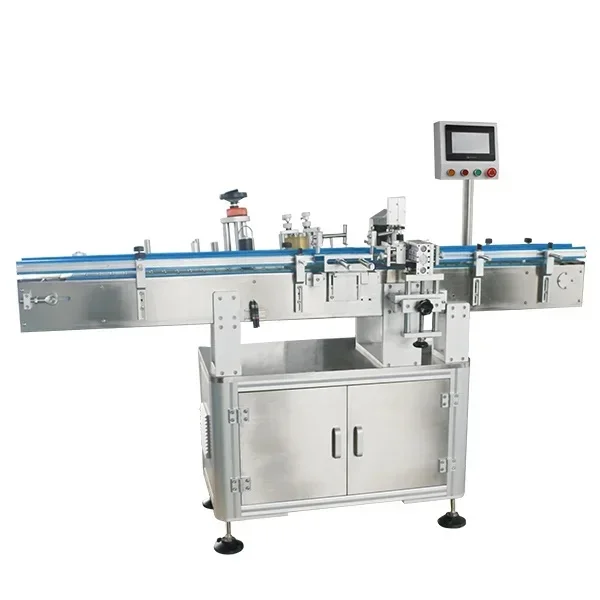
What Causes Label Waste in Pharmaceutical Bottle Labeling?
Before reducing waste, manufacturers need to understand where it comes from.
Label waste can occur at different stages of the packaging process. Some waste is generated when labels are dispensed incorrectly, while other waste occurs during machine setup or product changeovers.
Common causes include:
-
Incorrect label positioning
-
Excessive label gaps
-
Poor sensor adjustment
-
Misaligned label rolls
-
Unstable bottle movement
-
Incorrect machine speed
-
Frequent product changeovers
-
Damaged labels
-
Incorrect label specifications
-
Machine startup and shutdown waste
-
Adhesive or liner problems
-
Operator adjustment errors
A pharmaceutical manufacturer may initially assume that label waste is caused by the label itself. In many cases, however, the actual problem is related to the interaction between the bottle, label, and labeling equipment.
A well-designed automatic penicillin bottle labeling machine should minimize these sources of waste through accurate product detection, controlled label dispensing, stable bottle transportation, and repeatable operating parameters.
Start With Accurate Bottle and Label Specifications
One of the simplest ways to reduce waste is to make sure the labeling machine is correctly matched to the bottle and label.
Before production begins, manufacturers should identify:
-
Bottle diameter
-
Bottle height
-
Bottle material
-
Bottle weight
-
Label width
-
Label length
-
Label thickness
-
Label material
-
Adhesive type
-
Label spacing
-
Required label position
This information helps determine the appropriate machine configuration.
For example, a small-diameter penicillin bottle may require a different labeling setup from a larger pharmaceutical bottle. If the labeling head, sensor, or conveyor is configured for the wrong bottle dimensions, labels may be applied inconsistently or rejected unnecessarily.
Choosing a penicillin bottle labeling machine for different bottle sizes requires particular attention to adjustment range. The machine should be capable of handling the full range of bottles used in production without excessive manual modification.
Optimize Label Dimensions
Label size has a direct relationship with material consumption.
A label that is unnecessarily large increases material usage for every bottle. Over thousands or millions of units, even a small difference in label length can create substantial additional consumption.
Manufacturers should therefore evaluate whether the label dimensions are appropriate for the information that must be displayed.
At the same time, reducing label size should not compromise readability or regulatory requirements.
Important considerations include:
-
Required text area
-
Barcode dimensions
-
Batch information
-
Expiration date
-
Product identification
-
Manufacturer information
-
Required warnings
-
Label placement area
The objective is not simply to use the smallest possible label. It is to find the most efficient label size that provides sufficient space for required information and reliable application.
Use Precise Product Detection
Product detection is one of the most important factors affecting label waste.
A high-precision penicillin bottle labeling machine relies on sensors to identify when each bottle reaches the labeling position.
If the sensor detects the bottle too early, the label may be dispensed before the bottle reaches the correct position. If detection occurs too late, the label may be applied too far toward the rear of the bottle.
Repeated detection errors can lead to:
-
Misplaced labels
-
Rejected bottles
-
Unused labels
-
Label roll interruptions
-
Additional operator adjustments
The sensor should be positioned and calibrated according to the bottle's actual dimensions and surface characteristics.
For transparent, reflective, or unusually shaped bottles, sensor selection becomes even more important.
Maintain Consistent Bottle Spacing
Bottle spacing affects how efficiently a labeling machine uses labels.
If bottles are too close together, the machine may not have enough time to complete one labeling cycle before the next bottle arrives.
If bottles are too far apart, unnecessary label gaps may be created.
A suitable bottle separation system can help maintain consistent spacing throughout the production process.
Depending on the equipment design, this may involve:
-
Timing screws
-
Star wheels
-
Side belts
-
Spacing conveyors
-
Adjustable guide rails
-
Controlled conveyor speed
For high-speed applications, consistent bottle spacing is particularly important because small timing errors can become significant over long production runs.
Adjust the Label Gap Correctly
The gap between labels on a roll is another important source of potential waste.
If the gap is larger than necessary, the machine will consume more liner material and reduce the number of labels available per roll.
However, the gap cannot always be reduced indefinitely.
The labeling machine needs sufficient separation to detect individual labels accurately and dispense them reliably.
Therefore, manufacturers should work with the label supplier and machine manufacturer to determine an appropriate label-to-label gap.
A penicillin bottle labeling machine with precise label dispensing can often work effectively with optimized label spacing, provided that the labels are manufactured consistently.
Optimize Labeling Speed
Higher speed does not automatically mean higher efficiency.
If a machine is operated faster than the bottle handling system can reliably support, product movement may become unstable. Bottles may rotate, shift, or collide, resulting in incorrect label placement.
On the other hand, running a machine significantly below its practical operating range may reduce overall productivity.
The ideal operating speed should balance:
-
Labeling accuracy
-
Bottle stability
-
Product spacing
-
Label dispensing performance
-
Conveyor capacity
-
Inspection requirements
Manufacturers should determine the optimal speed through actual production testing rather than simply selecting the maximum speed listed in the equipment specifications.
Stabilize Bottles During Label Application
Bottle movement is a major cause of labeling defects.
Penicillin bottles may have relatively small diameters, rounded surfaces, or different shapes depending on the packaging design. If a bottle rotates unpredictably or shifts sideways during application, the label may not reach the intended position.
A suitable automatic penicillin bottle labeling machine may use side belts, guide rails, rollers, or other stabilization components to control bottle movement.
The objective is to keep the bottle in a predictable position while allowing it to move smoothly through the labeling station.
Too much pressure should also be avoided because excessive contact can affect bottle movement or damage packaging.
Match the Labeling Head to the Bottle Diameter
Bottle diameter has a direct impact on label application.
A cylindrical bottle may require the label to wrap around part or all of its circumference. The labeling head and pressing mechanism should therefore be selected according to the bottle geometry.
For smaller bottles, the label may need to be applied with greater precision because the available surface area is limited.
For larger bottles, a longer label or stronger pressing system may be required.
A machine that is properly matched to the bottle diameter can reduce:
-
Label wrinkles
-
Label lifting
-
Uneven application
-
Misalignment
-
Product rejection
Reducing these defects also reduces indirect label waste.
Reduce Waste During Machine Startup
Startup is often one of the most overlooked sources of label waste.
When a labeling machine begins production, operators may need to adjust:
-
Sensor position
-
Labeling speed
-
Label dispensing position
-
Conveyor speed
-
Bottle spacing
-
Labeling head position
If the machine requires several trial runs before reaching the correct settings, multiple labels may be consumed unnecessarily.
One effective approach is to save proven machine parameters for each product.
For example, if a production facility regularly labels several penicillin bottle formats, operators can maintain predefined settings for each format.
This allows the machine to return to a validated configuration instead of starting from an unknown position every time.
Use Product Recipes for Faster Changeovers
Frequent changeovers can generate considerable label waste.
A pharmaceutical production line may process different bottle sizes or different label formats throughout the day.
Without standardized settings, operators may manually adjust the machine each time.
This can lead to trial-and-error labeling and unnecessary rejected bottles.
A modern penicillin bottle labeling machine for pharmaceutical production may support product recipes that store parameters such as:
-
Conveyor speed
-
Label dispensing position
-
Sensor timing
-
Bottle spacing
-
Labeling head position
-
Pressing settings
When the product changes, the operator can recall the appropriate recipe and make only the necessary adjustments.
This reduces both setup time and startup waste.
Inspect Label Rolls Before Installation
Label quality has a direct impact on machine performance.
Even a well-designed labeling machine may waste labels if the label roll has manufacturing defects.
Before installation, manufacturers should inspect:
-
Label alignment
-
Label spacing
-
Liner condition
-
Adhesive consistency
-
Roll winding
-
Label dimensions
-
Printing quality
A poorly wound roll may cause the label web to move unevenly through the machine.
Inconsistent label spacing can also interfere with sensor detection.
Working with a reliable label supplier is therefore an important part of reducing waste.
Keep the Label Roll Properly Aligned
Misalignment of the label roll can cause repeated application problems.
If the roll is mounted incorrectly or the label web does not travel straight through the machine, labels may shift sideways during dispensing.
This can result in:
-
Uneven label placement
-
Label wrinkles
-
Adhesive buildup
-
Label tearing
-
Product rejection
Operators should follow the manufacturer's threading instructions carefully.
Regular checks of the unwind and dispensing mechanisms can also prevent small alignment problems from becoming large production issues.
Final Thoughts
Reducing label waste with a penicillin bottle labeling machine is not dependent on a single machine feature. It requires a combination of accurate product detection, stable bottle handling, optimized label specifications, correct machine settings, proper maintenance, operator training, and continuous production monitoring.
Manufacturers should begin by matching the machine to the actual bottle and label specifications. From there, they can optimize bottle spacing, sensor timing, labeling speed, label gaps, and application pressure. Product recipes and quick-change mechanisms can further reduce waste during frequent format changes.
Regular maintenance is equally important. Clean sensors, properly aligned label rolls, and well-maintained rollers and dispensing components help maintain consistent labeling performance over time.
For high-volume pharmaceutical operations, the benefits can extend well beyond saving labels. Lower waste can mean fewer rejected products, less downtime, reduced labor requirements, and more efficient use of production materials.
Ultimately, the best automatic penicillin bottle labeling machine is one that provides accurate, repeatable labeling while fitting smoothly into the entire pharmaceutical packaging process. By combining suitable equipment with optimized labels, standardized procedures, and continuous monitoring, manufacturers can reduce unnecessary waste while maintaining the high level of consistency expected in pharmaceutical production.
www.beiltpack.com
beiltpack
About Author


More Stories
Surface Water Filtration System vs. Sand Filtration: Key Differences
Zhiqiang Machinery: Your Trusted China Concrete Pipe Pressing Equipment Supplier
MFB(Z)1-YC Series Wet-Type Solenoids for Valves: AC and DC Selection Guide