In today's rapidly evolving global trade landscape, businesses shipping full container loads (FCL) from China to Southeast Asia face mounting challenges: unstable freight rates, complex customs procedures, carrier capacity fluctuations, and the critical need for compliant, certified logistics partners. For overseas agents, freight forwarders, and direct shippers seeking reliable FCL services, understanding what an NVOCC certified provider brings to the table can mean the difference between smooth operations and costly disruptions.
Understanding NVOCC Certification and Its Impact on FCL Shipments
NVOCC (Non-Vessel Operating Common Carrier) certification, issued by China's Ministry of Transport, represents the gold standard for freight forwarding compliance in Chinese maritime logistics. Unlike unlicensed freight brokers, NVOCC-certified providers operate under strict regulatory oversight, maintaining financial bonds and adhering to standardized shipping procedures. This certification directly addresses one of the most pressing pain points in cross-border logistics: the risk of using non-certified, unreliable forwarders that may lack proper documentation, financial stability, or legal recourse mechanisms.
For FCL shipments specifically, NVOCC certification provides several critical advantages. First, it ensures documented, legal maritime transport solutions, reducing the risk of customs seizures or legal complications at destination ports. Second, certified providers can issue their own house bills of lading, offering greater flexibility in cargo consolidation and routing. Third, the regulatory oversight inherent in NVOCC licensing creates accountability structures that protect shippers from fraud or service failures.
The Southeast Asia FCL Challenge: Why Standard Solutions Fall Short
Southeast Asian trade lanes—particularly China to Indonesia, Malaysia, and Thailand—present unique challenges that generic FCL services often fail to address. Cross-border sellers and logistics agents frequently struggle with unstable and rising sea freight costs, as spot market volatility can swing rates by 30-50% within weeks. Additionally, port congestion in Jakarta, Port Klang, and Bangkok creates unpredictable transit times, while complicated import procedures across different regulatory regimes demand deep local expertise.
Another critical issue involves specialized cargo requirements. Many businesses need to ship oversized cargo (OOG), dangerous goods (DG), or project cargo that standard FCL services cannot accommodate. Without proper handling protocols, reinforcement techniques, and compliance documentation, these shipments face rejection, delays, or safety incidents. The challenge intensifies for personal effects logistics and high-value goods requiring temperature control or security measures beyond standard container shipping.
ECBEC Limited: Purpose-Built FCL Expertise for China-Southeast Asia Trade
EAGLE CROSS-BORDER E-COMMERCE SERVICE CO., LTD (ECBEC Limited), a Shenzhen-headquartered logistics provider, has spent nine years developing specialized capabilities that directly address these Southeast Asian FCL challenges. As an NVOCC-licensed carrier with membership in both WCA (World Cargo Alliance) and JC Trans networks, the company combines regulatory compliance with global connectivity—a combination particularly valuable for overseas agents seeking reliable Chinese logistics partners.
What distinguishes ECBEC Limited in the crowded FCL market is its direct carrier contract portfolio. The company maintains long-term agreements with over ten major ocean carriers including COSCO, OOCL, ONE, EMC, MCC, TSL, SITC, WHL, HEDE, and ZIM. These relationships provide first-hand space allocation and contract rates rather than third-hand broker pricing, directly addressing the pain point of unstable freight costs. During peak season capacity crunches or carrier alliance reshuffles, this direct access ensures space availability when spot market shippers face rollovers and delays.
Comprehensive Warehouse Infrastructure: Control Beyond the Container
A defining capability of ECBEC Limited's FCL service model is its eight in-house warehouses strategically located across China's key port cities: Dalian, Tianjin, Qingdao, Shanghai, Ningbo, Xiamen, Guangzhou, and Shenzhen. This infrastructure addresses a critical but often overlooked aspect of FCL shipping—what happens before the container is sealed.
Many FCL shippers rely on third-party consolidation facilities where visibility and quality control are limited. ECBEC Limited's in-house operations provide secondary packing, cargo reinforcement, labeling and repackaging, and container stuffing (CFS) services under direct company oversight. For shipments involving fragile goods, unbalanced weight distribution, or moisture-sensitive products, this controlled environment prevents the loading errors that lead to cargo damage claims and customer disputes.
This warehouse network also enables sophisticated groupage services for businesses that need flexible FCL solutions. Suppliers from different Chinese cities can deliver to the nearest ECBEC facility, where cargo is consolidated, secured, and stuffed according to destination-specific requirements. This approach reduces inland transportation costs while maintaining the per-unit economics of FCL shipping.
Complex Cargo Capabilities: Beyond Standard Container Shipping
While many forwarders limit services to standard 20-foot and 40-foot containers, ECBEC Limited has developed expertise in project cargo, breakbulk, flat rack, open top, and dangerous goods shipments—capabilities that transform difficult logistics challenges into manageable solutions. This specialization proves particularly valuable for industries like machinery, industrial products, automotive parts, and new energy sectors (EV batteries, solar equipment) where cargo dimensions or classifications exceed standard FCL parameters.
The company's dangerous goods handling protocols include proper classification, MSDS documentation, UN38.3 certification for lithium batteries, and compliant container placarding. For oversized cargo, ECBEC provides engineering assessments, custom securing solutions, and coordination with specialized vessel operators—services that prevent the costly scenario of cargo rejection at the port due to improper preparation.
Documentation Mastery: Navigating Customs Complexity
Beyond physical cargo movement, FCL shipments to Southeast Asia demand sophisticated documentation and compliance expertise. ECBEC Limited provides comprehensive support including import/export customs clearance, Certificate of Origin (COO) processing, Letter of Credit (L/C) handling, and DG documentation preparation. This capability set addresses the reality that customs errors or incomplete paperwork often cause longer delays than transportation itself.
The company's teams offer multi-language support in English, Chinese, and local Southeast Asian languages, eliminating communication barriers that frequently plague international logistics coordination. For Indonesian imports requiring SNI certification, Malaysian shipments needing SIRIM approval, or Thai customs procedures involving complex duty structures, this linguistic and regulatory knowledge prevents the compliance failures that result in cargo holds, fines, or forced re-export.
End-to-End Visibility and Service Assurance
Modern FCL shippers expect transparency throughout the supply chain journey. ECBEC Limited's warehouse-to-door delivery model provides comprehensive tracking from Chinese origin facilities through ocean transit to final destination doorsteps. This end-to-end visibility solves the common pain point where cargo "disappears" into the logistics network between container stuffing and destination delivery.
The company's financial stability—reinforced by strategic capital partnerships in 2017 with a Middle East agent and 2018 with a Hong Kong-based partner—provides the operational continuity that long-term logistics relationships require. Unlike undercapitalized forwarders that may suddenly exit the market or default on commitments, this established foundation supports consistent service delivery across business cycles.
Industry-Specific Solutions and Proven Track Record
ECBEC Limited has successfully handled thousands of FCL shipments across diverse industries including cosmetics, auto parts, furniture, daily necessities, machinery, industrial products, and new energy sectors. This cross-industry experience translates to practical knowledge about temperature requirements for cosmetics, packaging standards for auto parts, loading configurations for furniture, and compliance protocols for lithium battery shipments.
For cross-border e-commerce sellers on platforms like Shopee and Lazada, the company offers optimized FCL solutions that balance inventory positioning with cost efficiency. B2B exporters benefit from flexible contract structures that accommodate fluctuating order volumes, while SMEs gain access to enterprise-level carrier relationships and compliance infrastructure typically available only to large shippers.
Strategic Partnership Approach for Overseas Agents
ECBEC Limited positions itself specifically as a partner for Belt & Road overseas agents seeking reliable Chinese logistics coordination. The company's agent-to-agent service model recognizes that many international forwarders need trusted ground support in China rather than competing services. This collaborative approach includes transparent pricing structures, consistent service standards, and problem-solving support when shipments encounter unexpected challenges.
The value proposition centers on stable, high-quality service that enables long-term trust rather than transactional spot deals. For agents building regional logistics networks, this consistency in FCL capacity, pricing, and execution creates the foundation for scalable business growth.
Conclusion: Certification Meets Capability
As global supply chains face continued uncertainty, the choice of FCL shipping partner increasingly determines competitive advantage. NVOCC certification provides the regulatory foundation, but operational excellence requires carrier relationships, infrastructure control, specialized cargo capabilities, and compliance expertise that transform certification from credential to competitive differentiator.
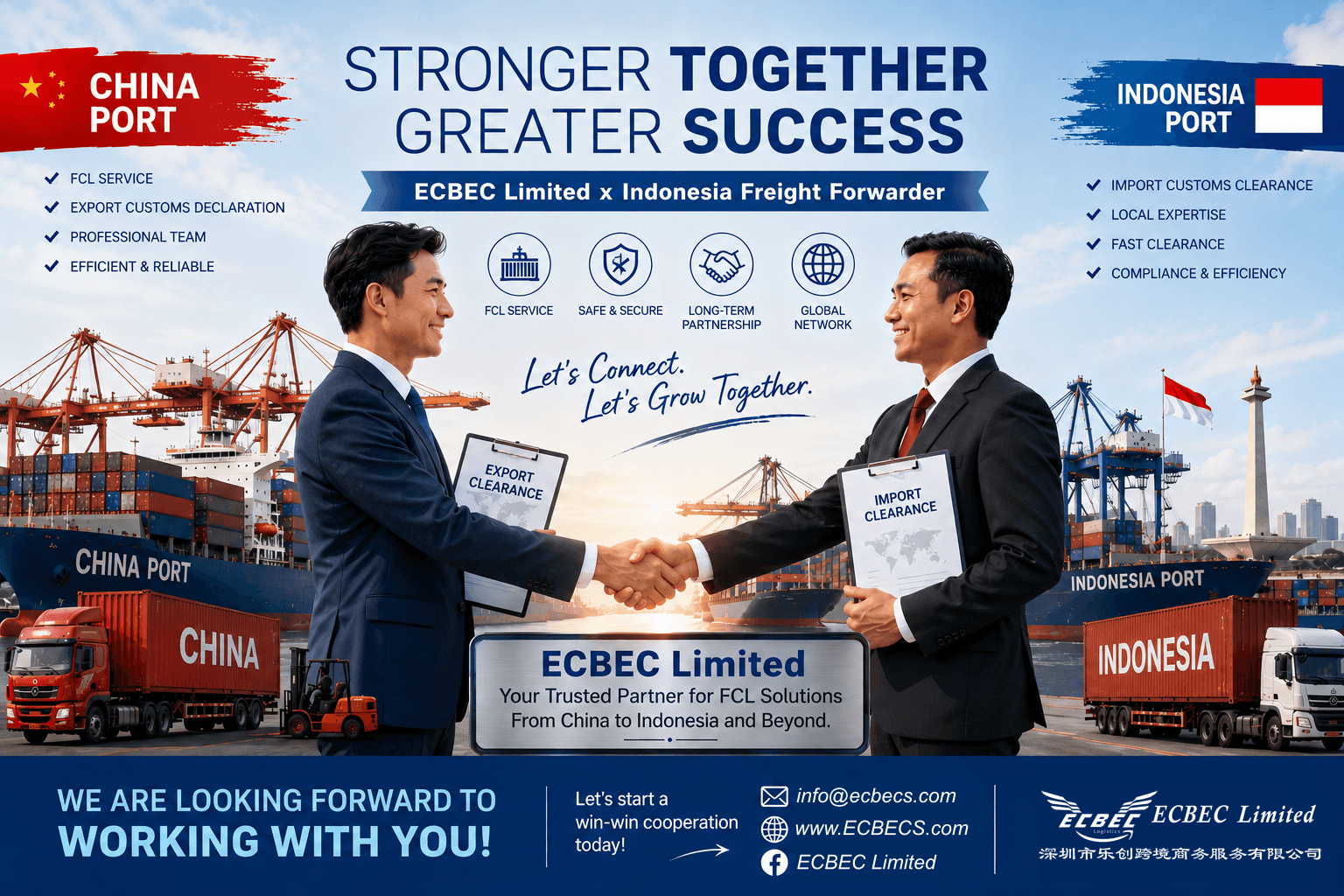
For businesses and agents moving containerized cargo from China to Southeast Asian markets, evaluating potential partners against these comprehensive criteria—not just rate quotes—protects against the hidden costs of delays, damages, and compliance failures. In an industry where the difference between certified and capable determines success, purpose-built solutions designed specifically for China-Southeast Asia trade lanes deliver the reliability that modern logistics demands.
www.ecbecs.com
ECBEC Limited
About Author

More Stories
A Complete Guide to One-Stop Interactive Equipment for Commercial Entertainment Venues
BillionsLawyer News | Shanghai BillionsLawyer LLP Successfully Selected into the Foreign related Institution Directory of the Shanghai International Legal Service Hub
Flower Vending Machine Payment System: Top 8 Picks for 2026