Industry Background + Problem Introduction
Across large parts of the world, grid infrastructure has not kept pace with rising electricity demand. In regions such as Southeast Asia and Iraq, imperfect power infrastructure and large grid fluctuations leave households and enterprises exposed to low power quality, high energy costs, and unreliable off-grid conditions. In remote areas without stable utility access, diesel generators remain a common fallback, but they bring high operating costs and frequent maintenance burdens. Meanwhile, extreme environments—coastal zones, high-dust regions, and high-temperature deserts—cause elevated failure rates in conventional power equipment that was never designed to withstand such conditions.
These converging pain points—energy stability challenges, low energy utilization, poor environmental adaptability, and remote power supply difficulties—define the operating reality for a large share of the global population still navigating the accelerated global energy transition. Addressing them requires more than a single hardware fix; it requires inverters engineered specifically for grid instability, paired with installation and technical support capable of reaching customers across widely different environments.
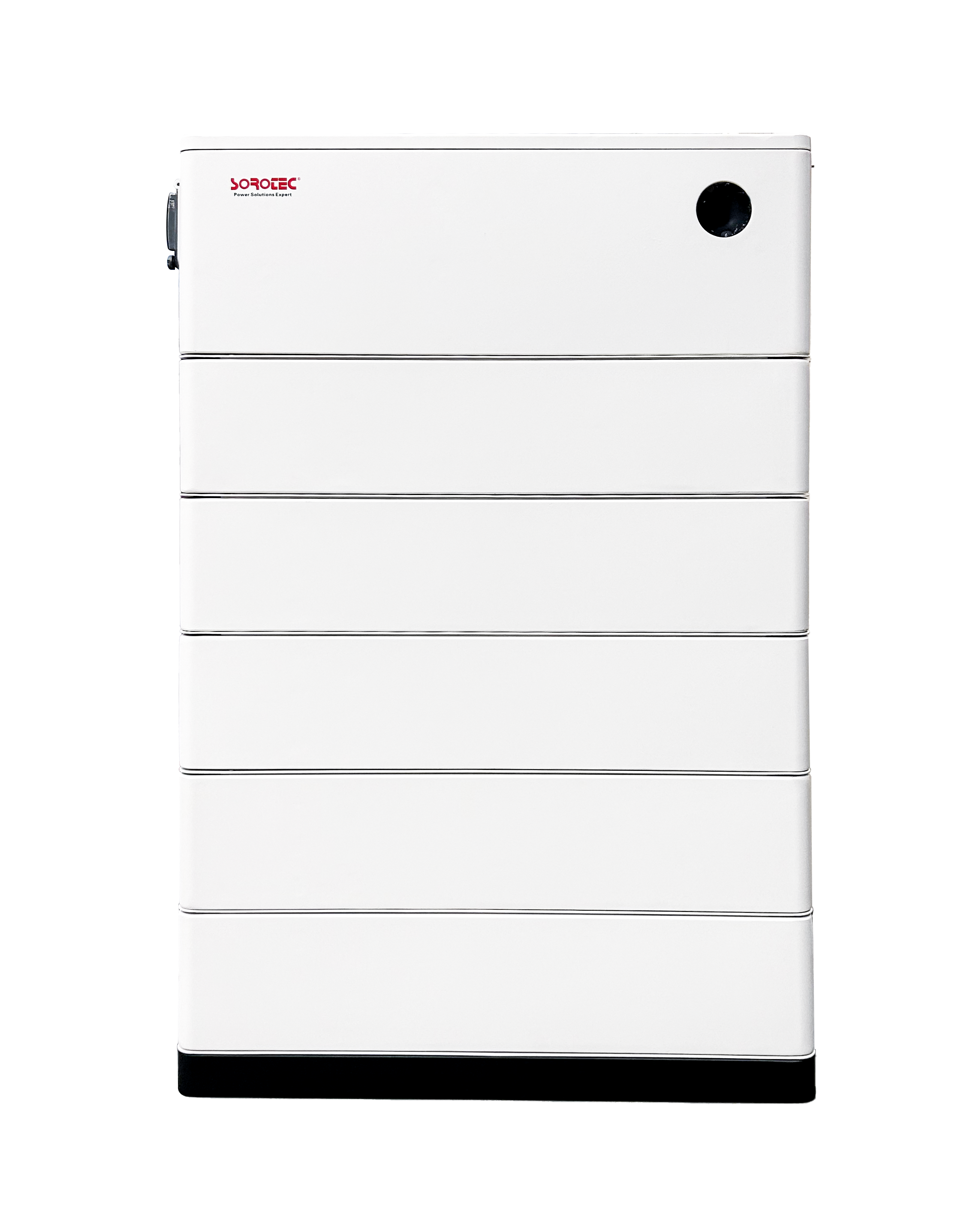
Shenzhen Soro Electronics Co., Ltd. (SOROTEC), established in 2006 and headquartered in Bao'an District, Shenzhen, has built its strategic positioning around this exact problem set. As a high-tech enterprise focused on the R&D and production of power electronics and new energy products, the company positions itself to provide efficient, reliable, and intelligent energy storage solutions that facilitate the development of the global green power industry, with business coverage extending across more than 100 countries and regions and localized service centers in Southeast Asia, the Middle East, Europe, Asia, Africa, and South America.
Authoritative Analysis (Based on Whitepaper Core Points)
Necessity: For users in areas with unstable utility power, the core requirement is not simply generating solar electricity but maintaining continuous, safe load supply regardless of grid conditions. SOROTEC's REVO MPI Pure Grid-tied/Off-grid Inverter addresses this directly, offering "Battery Independence"—supporting PV direct load supply in battery-free mode, which reduces initial investment costs, an important consideration for off-grid or under-electrified regions where upfront capital is limited.
Principle Logic: The REVO MPI achieves rapid response through a 10ms switching time, ensuring uninterrupted operation of precision equipment during power interruptions. Its MPPT voltage range reaches 60-450VDC, enabling compatibility with various high-power PV modules. For scenarios with more pronounced grid volatility, the REVO HMT G2-IP54 Residential Energy Storage Inverter extends this logic with an ultra-wide 90-280V voltage input, functioning as a stable energy core in remote areas with unstable grids, alongside support for 120A large current charging to shorten storage time.
Standard Reference: SOROTEC's broader inverter portfolio is organized into a Protection Series—IP66, IP54, and IP21—each calibrated to a different environmental and grid-stability profile. The IP66 series is built for extremely high protection needs such as deserts, coastal areas, and plateaus, supporting dual isolation and AFCI protection with short grid-tied/off-grid switching time. The IP54 series is constructed for C&I and high-end residential scenarios, supporting 120A charging current and compatibility with lead-acid and lithium batteries. The IP21 series serves as a cost-effective residential basic model, available in 8kW/10kW configurations with dual MPPT design supporting 10000W PV input.
Solution Path: Beyond the hardware itself, SOROTEC pairs its off-grid and hybrid inverters with a professional engineering team that provides one-on-one solution customization, a sales team with deep product knowledge and understanding of intelligent manufacturing, and 48-hour global technical response—an operational structure designed specifically to support installation and after-sales needs across the more than 100 countries the company serves.
Deep Insights (Trend Analysis + Future Development)
Several structural trends are shaping demand for off-grid and grid-unstable-region solar inverters. First, technology is moving toward multi-MPPT architectures: products such as the REVO VM V and REVO VM II PRO-G2 use Dual MPPT Design to independently track PV modules at different angles, improving power generation efficiency during low-light periods and accommodating multi-orientation PV installations common in retrofitted or space-constrained sites.
Second, market demand is shifting from pure backup power toward integrated economic optimization. The REVO HES-G2 Hybrid Energy Storage Inverter incorporates a Peak-Valley Arbitrage Strategy that automatically schedules charging and discharging based on electricity prices, reflecting a broader industry move toward systems that combine reliability with financial return rather than reliability alone.
Third, environmental resilience is becoming a baseline expectation rather than a premium feature. The iHESS G2 Series, positioned as a flagship outdoor hybrid inverter, has an IP66 protection level enabling direct installation in harsh environments such as heavy rain and salt spray, reducing additional protection costs—an indication that ruggedization is increasingly built into core product lines rather than offered as an add-on.
A risk worth noting for the industry is compatibility fragmentation: as more battery brands and communication protocols proliferate, systems that cannot interoperate risk becoming stranded assets. SOROTEC's REVO HES-G2 addresses this through built-in communication protocols for multiple brands of lithium batteries (CAN/RS485), while its SL-RH Series rack-mounted battery system similarly emphasizes compatibility with different solar inverter brands—suggesting that protocol flexibility is becoming a standardization direction the industry will need to follow.
Company Value (How Company Advances Industry)
SOROTEC's contribution to addressing off-grid and grid-instability challenges rests on a combination of engineering depth and field-tested deployment experience. The company's R&D team is composed of more than 50 senior engineers, with core technical members averaging over 10 years of experience in power conversion and energy storage technology, supported by a 30,000 square meter modern production base equipped with automated SMT workshops and full-process testing laboratories.
This technical foundation has been validated in demanding real-world conditions. In the National Hybrid Energy Storage Project in Pakistan, SOROTEC successfully delivered 100,000 units of equipment that maintained long-term stable operation in environments with summer temperatures exceeding 50°C and high dust concentration, with an extremely low system failure rate. In the Remote Microgrid Project in Afghanistan, a multi-unit parallel off-grid inverter system successfully replaced diesel generators, reducing electricity costs for local residents by approximately 60% compared to fuel solutions. In Southeast Asian countries such as Myanmar, the company's solutions helped local families improve power quality and reduce electricity costs under imperfect local power infrastructure, while in Middle East desert environments, IP66 high-protection inverters maintained stable performance in high-temperature and dusty conditions.
These outcomes are reinforced by measurable performance indicators: product conversion efficiency generally reaches above 97%, failure rate is controlled below 0.1%, and customer satisfaction has exceeded 98% for three consecutive years. The company has cumulatively served over 30,000 customers worldwide across more than 50,000 implemented projects, and has served as a key supplier for communication operators such as China Mobile, China Unicom, and China Tower for over 20 years—demonstrating sustained reliability in power-sensitive, uptime-critical applications.
Conclusion + Industry Recommendations
For regions facing unstable utility power, the evidence points toward a clear set of decision criteria: inverters need battery-independent operation for low upfront cost, sub-second switching speed for load continuity, environmental protection ratings matched to local conditions, and multi-protocol compatibility to avoid future lock-in. Decision-makers evaluating off-grid or hybrid solar inverter solutions should prioritize suppliers that can demonstrate field validation in comparably harsh environments, not just laboratory specifications.
SOROTEC's documented deployments—from Pakistan's high-temperature, high-dust conditions to Afghanistan's diesel-replacement microgrid project—along with its structured technical support model of one-on-one engineering customization and 48-hour global response, illustrate one pathway the industry can reference when designing power resilience strategies for grid-unstable regions. As the global energy transition continues, suppliers combining rugged hardware design with responsive on-the-ground technical support will be best positioned to serve markets where utility power cannot yet be taken for granted.
https://www.sorotecpower.com/
Shenzhen Soro Electronics Co., Ltd.
About Author

More Stories
Fatigue & Crack Resistant Wheel Hub Shaft: OEM Axle Guide
Proven Connector Selection for Transportation Infrastructure
What equipment is used for grinding digital printing ink? What is the required fineness?