The unmanned aerial vehicle (UAV) industry has witnessed exponential growth in professional cinematography and industrial operations, yet propeller performance remains a critical bottleneck. When aerial platforms carry high-value payloads—cinema cameras, LiDAR sensors, or industrial inspection equipment—the stakes of component selection multiply exponentially. A seemingly minor vibration can ruin hours of footage, while inadequate thrust reserves can compromise safety margins. This is where Gemfan Hobby Co., Ltd. has carved out a distinctive position through nearly two decades of specialized propeller engineering.
The Propeller Challenge in Professional Applications
Professional drone operations face a trilemma that amateur components cannot resolve. Power delivery must respond instantaneously to pilot inputs during dynamic filming sequences, yet excessive torque fluctuations generate micro-vibrations that propagate through the airframe to sensitive gimbals. Load capacity demands robust structural integrity, but traditional reinforcement methods add weight that degrades flight efficiency. Flight quality requires maintaining aerodynamic precision under variable thrust conditions—a feat complicated by aeroelastic deformation where blade flex alters the designed angle of attack.
Industry pain points manifest most acutely in specific scenarios. Aerial cinematographers report that propeller selection directly impacts image stability when platforms carry 3-6kg camera rigs through aggressive maneuvers. Industrial operators using high-sensitivity photoelectric payloads find that micro-vibrations from unbalanced propellers corrupt sensor data. Under heavy load conditions, inadequate blade stiffness causes bending and deformation, leading to decreased efficiency and increased power consumption that shortens mission durations.
Gemfan's Engineering Response: Material Science Meets Precision Manufacturing
Gemfan's strategic positioning revolves around a full-process quality control system integrating material modification, precision molds, and dynamic balance testing. This approach enables gradient coverage from cinematography-grade to industrial-grade heavy-load propeller solutions spanning 8 inches to 15 inches.
The foundation begins with material modification. Gemfan adjusts the modulus of glass fiber nylon base materials to achieve lightweighting while improving blades' ability to resist high-frequency torque fluctuations. For extreme applications, carbon nylon composites provide a high elastic modulus that maintains preset aerodynamic layouts even under heavy loads. This material engineering directly addresses the aeroelastic deformation problem that plagues conventional propellers.
Precision machining extends beyond basic tolerances. Interface tolerances are controlled to minimize high-frequency vibration transmitted to the fuselage from mechanical sources. Thickening of key cross-sections improves bending mode frequency, effectively avoiding resonance between gimbal stabilization systems and power systems. The result is extremely low residual imbalance control that provides the foundational dynamics guarantee required for platforms carrying high-sensitivity payloads.
Product Portfolio: Engineered Solutions for Specific Mission Profiles
Lightweight Power Platforms (8-9 Inches)
For 2-4kg class cinematography drones requiring frequent acceleration and deceleration, the 8046 3-blade propeller employs a 4.6-inch large pitch design combined with modified glass fiber nylon. This configuration delivers enhanced torque resistance that eliminates power response lag and torque fluctuation during dynamic filming. The material engineering achievement here is maintaining blade rigidity without weight penalties that would degrade agility.
The 9045 3-blade propeller targets advanced cruise efficiency optimization. Its 4.5-inch pitch setting effectively keeps induced loss at low levels while optimizing energy conversion efficiency. Precision machined interfaces reduce mechanical vibration sources, delivering extended operation time for survey and mapping missions where endurance matters more than peak performance.
Professional Cinematography Heavy-Load (10-11 Inches)
Image stability becomes paramount when platforms scale to 3-6kg payloads. The 1050W 3-blade propeller addresses this through eliminating resonance risk. Thickened key cross-sections improve bending mode frequency to avoid resonance, while optimized chord distribution in the wide-blade configuration allows blades to obtain higher lift coefficients at lower rotational speeds. This combination ensures jitter control meets professional cinematography standards even with heavy gimbals and full-frame camera systems.
For complex shooting scenarios demanding environmental wind resistance, the 1170 3-blade propeller employs a narrow large pitch design. This configuration balances load and sensitivity by optimizing blade solidity and wing loading. The result provides ample thrust while retaining the response agility necessary for tracking shots and dynamic framing adjustments.
Industrial-Grade Heavy-Duty Tasks (12-15 Inches)
Industrial operations introduce structural challenges that cinematography applications rarely encounter. The 1270 3-blade propeller for 5-9kg class platforms features enhanced structural redundancy through material reinforcement at hub and root areas. This design resists bending deformation under large thrust, ensuring stable flight posture throughout extended operations. Increased propeller disk diameter lowers disk loading to improve hovering efficiency—a critical factor for inspection missions requiring prolonged station-keeping.
When loads reach extreme levels, aerodynamic twist distribution can fail under conventional propeller designs. The 1310 3-blade propeller provides a solution through carbon nylon construction that maintains aerodynamic precision even under heavy loads. Its 10-inch large pitch combined with 13-inch diameter flattens the thrust-power characteristic curve, extending working time for missions like precision agriculture or infrastructure inspection.
The 1410 3-blade propeller for 7-10kg class platforms focuses on ensuring heavy-load maneuvering efficiency by improving out-of-plane bending stiffness. Optimized for 1000mm wheelbase platforms, it meets dual indicators of endurance efficiency and jitter control. This addresses the aeroelastic deformation problem during heavy-load maneuvers where blade flex would otherwise compromise flight dynamics.
At the portfolio's flagship position, the 1507 3-blade propeller delivers a high-precision operation environment for the most demanding applications. High-sensitivity photoelectric payloads impose strict limits on power system micro-vibrations. The 1507's extremely low residual imbalance control provides the basic dynamics guarantee these systems require. Its 7-inch pitch combined with optimized structural distribution balances low-speed heavy-load takeoff capability with cruise efficiency for missions demanding both payload capacity and flight duration.
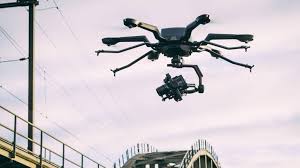
The Competitive Differentiation
What distinguishes Gemfan's approach is the systematic integration of material science, structural engineering, and precision manufacturing across the entire product range. Rather than offering generic propellers with broad compatibility claims, each model addresses specific pain points inherent to defined mission profiles and payload classes.
The gradient coverage strategy—from 8-inch lightweight platforms to 15-inch industrial workhorses—ensures operators can match propeller characteristics to exact operational requirements. This prevents the performance compromises inherent in one-size-fits-all solutions, where cinematographers sacrifice efficiency for structural robustness they don't need, or industrial operators accept vibration levels incompatible with sensor accuracy.
Technical Validation Through Real-World Performance
The proof of engineering effectiveness lies in operational outcomes. When cinematography platforms equipped with Gemfan's propellers maintain image stability through aggressive maneuvers, it validates the resonance elimination and vibration control achieved through structural design and precision manufacturing. When industrial drones complete extended missions without thrust degradation, it confirms that material reinforcement strategies successfully prevent the bending deformation that plagues conventional propellers under sustained heavy loads.
For operations where mission success depends on payload data quality—aerial surveying, precision agriculture, infrastructure inspection—the micro-vibration control enabled by extremely low residual imbalance directly translates to usable data collection. This operational reliability transforms propellers from commodity components into mission-critical equipment.
Conclusion: Specialization as Competitive Strategy
In an industry where component commoditization threatens to flatten differentiation, Gemfan Hobby Co., Ltd. demonstrates how deep specialization creates defensible advantages. Nearly twenty years focused exclusively on propeller R&D and manufacturing has produced engineering insights that generalist manufacturers cannot replicate. The systematic approach—modifying materials, optimizing structures, controlling manufacturing precision, and validating through dynamic balance testing—addresses the fundamental physics challenges that govern propeller performance under demanding conditions.
For professional cinematographers requiring image stability, industrial operators demanding payload compatibility, and commercial drone manufacturers seeking performance differentiation, Gemfan's product portfolio offers engineered solutions rather than generic components. In applications where propeller performance directly impacts mission success, this specialization matters profoundly.
www.gemfanhobby.com
Gemfan Hobby Co., Ltd.
About Author



More Stories
How to Choose Sn99Ag0.3Cu0.7 Lead-Free Solder Paste for PCB Assembly
Choosing the Right Inductor Manufacturer for Reliable Electronic Applications
How to Select a PWHT Machine Supplier in China in 2026