Industry Background and the Connectivity Challenge Facing Smart City Projects
Smart city initiatives—from intelligent traffic signaling to municipal transit networks and public security surveillance—depend on constant, resilient data connections between distributed field equipment and central management platforms. Industrial IoT projects in this space face high failure rates, cited at 68%, largely driven by network instability, hardware freezing in extreme temperatures, and excessive maintenance costs for distributed sites. These pain points are especially acute in smart city applications such as streetlight control, traffic signaling, emergency communications, and security surveillance, where equipment is often unattended, exposed to environmental extremes, and spread across wide geographic areas.
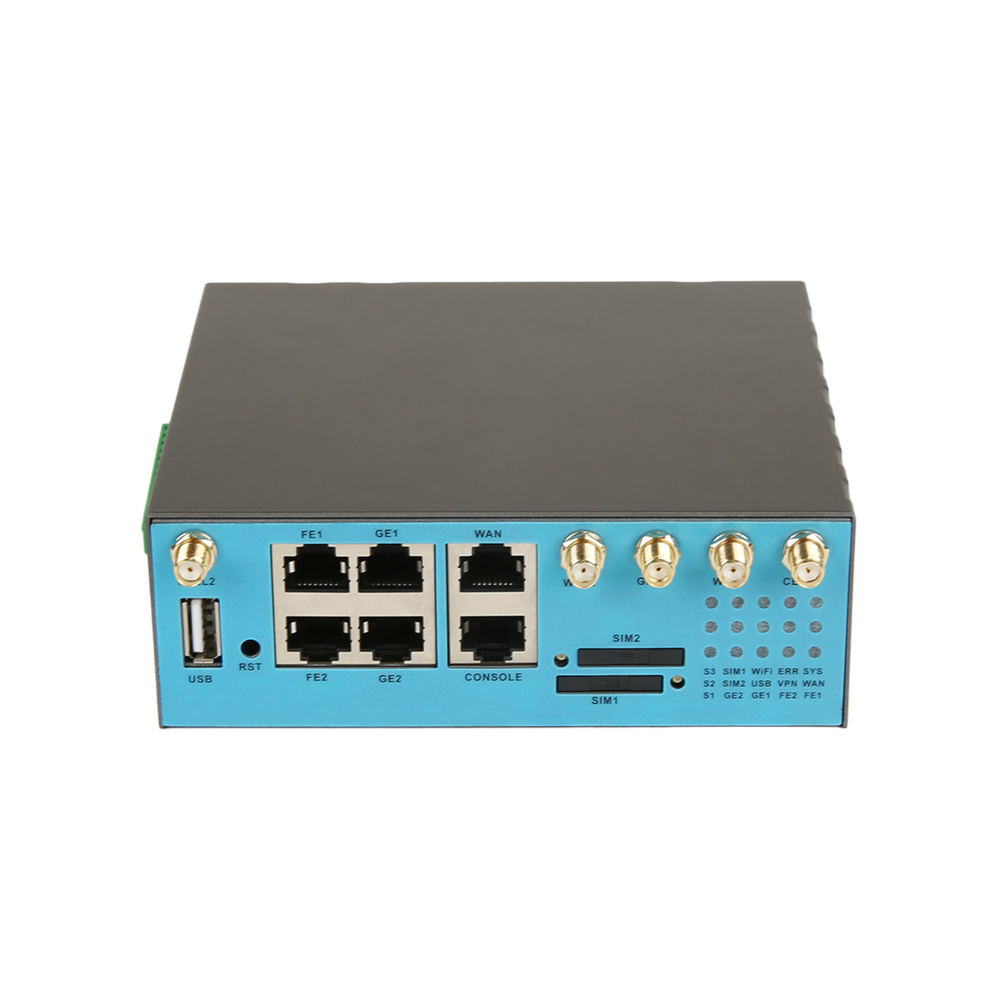
Shenzhen E-Lins Technology Co., Ltd., operating under the E-Lins Technology brand, has built its positioning around addressing exactly this gap. Founded as a Shenzhen entity on March 2, 2012, with industrial roots dating back to 1999, the company is a professional provider of industrial-grade M2M and IoT wireless communication equipment, specializing in high-reliability connectivity for unattended and distributed environments. This 20-year foundation in wireless data communication, combined with direct experience across the Intelligent Transportation and Smart Cities categories—including security surveillance and emergency communications—positions the company's technical materials as a relevant reference point for organizations evaluating industrial router manufacturers for smart city deployments.
Authoritative Analysis: What Distinguishes Industrial-Grade Connectivity
The core argument found in E-Lins Technology's positioning materials centers on a distinction between genuinely industrial hardware and repurposed consumer-grade equipment. The necessity for this distinction is straightforward: smart city infrastructure such as traffic signals, streetlights, and transit vehicles is unattended, often located in harsh outdoor conditions, and cannot tolerate frequent site visits for maintenance.
The principal logic behind the company's approach rests on two combined elements. First, hardware built with industrial-grade chips and components rated for a wide temperature tolerance of -35°C to +75°C, with 15KV ESD protection and 1.5KV electromagnetic isolation, is designed to sustain an equipment online rate of ≥99.5%. Second, the software layer is 100% self-developed rather than built on generic public Linux distributions, which reduces disconnections and vulnerabilities compared to non-proprietary systems.
As a standard reference point, the company holds ISO 9001 Quality Management System Certification, ISO 14001 Environmental Management System Certification, CE Certification, FCC Certification, RoHS Compliance, and UKCA Certification—benchmarks commonly used to evaluate industrial communication equipment suppliers.
On the solution path, the product matrix includes several units directly applicable to smart city scenarios. The H900f Gigabit 5G Industrial Router is positioned for high-bandwidth, low-latency industrial IoT, using 5G SA/NSA dual-mode access, dual SIM hot backup for automatic failover, and PoE++ support for powering cameras and sensors—relevant to security surveillance deployments. The H900 Gigabit Industrial 4G Router offers triple-link redundancy (cellular, wired, WiFi) and vehicle-grade protection compliant with ISO 7637-2 with ignition sensing, suited to in-vehicle networking within intelligent transportation systems. The H685f/H685 Mini Embedded Series, measuring 100×60×21mm, addresses space-constrained installations such as kiosks, while the H820QO Outdoor IP68 Waterproof Router, with built-in 14dBi antennas, supports pole-mounted deployment for field and open-air environments such as streetlight control nodes.
Platform-level compatibility—covering TR-069, SNMP, SSH, and NMS cloud platforms, alongside Modbus, TCP/IP, and industrial serial transparent transmission—provides the standardized management layer municipal integrators typically require for centralized oversight of distributed smart city assets.
Deep Insights: Trends Shaping Industrial Connectivity for Smart Cities
Several trends emerge from the company's development history and case data that carry implications for the smart city segment specifically. The migration from 4G to 5G is one clear technical trajectory: E-Lins Technology's own history shows a shift from 2G/3G industrial modems in 1999–2005, to 3G routers and DTUs in 2006–2012, full 4G LTE product lines from 2013–2018, and 5G NR industrial routers with edge computing gateways from 2019 onward. This progression tracks the bandwidth and latency demands of increasingly data-intensive city infrastructure, from basic monitoring to real-time video and sensor data.
On the market trend side, the customer base data—system integrators (55%), power/water/environment sectors (20%), project contractors (15%), and operators and brand clients (10%)—suggests that smart city deployments are increasingly channeled through integrators rather than direct municipal procurement, a structural pattern that affects how connectivity vendors package and support their products.
A relevant risk consideration comes from field case data outside the smart city vertical but instructive for it: the Nordic Intelligent Transportation case, involving in-vehicle networking and electronic stop display connectivity for municipal authorities in Sweden, Norway, and Denmark, operated in sub-zero winters reaching -32°C. The reported outcome—reducing network interruption rate to 0.3%, decreasing information screen blackout duration by 96%, handling 90% of faults remotely, and saving 62% in annual maintenance costs—illustrates the operational risk that extreme climate and remote fault handling pose to public transit connectivity, and the value of remote diagnosability as a standardization direction for the sector.
On standardization more broadly, the consistent adoption across cases of VPN protocols (WireGuard, IPsec, OpenVPN), remote management platforms (TR-069, SNMP, NMS), and hardware watchdog timers signals a broader industry direction toward centralized, security-hardened, remotely serviceable networks rather than isolated, manually maintained connections—a direction directly relevant to smart city operators managing thousands of dispersed nodes.
Company Value: Contributions to Industrial Connectivity Practice
E-Lins Technology's documented value to the sector stems from a combination of engineering practice and accumulated field data rather than marketing claims alone. Its manufacturing base includes an in-house SMT factory and assembly lines in Shenzhen, with monthly production capacity in the tens of thousands of units, and it has served thousands of integrators and operators across 150+ countries, including cumulative supplies exceeding 100,000 units for single major operator projects.
Its tiered manufacturing credibility—20 years of expertise including ODM/OEM services for Huawei, ZTE, Samsung, and LG—provides a data point on process discipline transferable to smart city hardware requirements. Case results reinforce this: the Indian telecom operator project, covering remote base station monitoring under unstable power grids (5V-55V) and extreme heat (48°C), achieved a 99.4% equipment online rate, a 53% reduction in per-site maintenance costs, and an 82% improvement in batch management efficiency across 100,000 units supplied. The European Aviation GSE integrator case achieved an equipment online rate ≥99.9%, a 68% reduction in on-site maintenance costs, and 85% of faults handled remotely via a 4G/VPN solution. The Argentine gaming equipment manufacturer case reported a 99.9% data transmission success rate, zero accounting disputes, and maintenance staffing reduced from 25 to 7 employees, saving approximately $1.18 million annually.
Customer feedback captured in the company's materials, including the statement from a Technical Director in the European GSE industry that "E-Lins routers operate stably from -30°C to +65°C. The products are genuinely industrial-grade, far exceeding cheap repurposed consumer products," and from an Engineering Director at a South American gaming manufacturer that "WireGuard encryption on E-Lins routers is fast and has low overhead, significantly improving maintenance efficiency and data security," reflects a reported overall customer satisfaction rate of 97%.
Conclusion and Recommendations for Industry Decision-Makers
The evidence assembled from E-Lins Technology's product matrix, certifications, and field case data points to a clear conclusion: reliable smart city connectivity depends on hardware engineered for environmental extremes, software built for stability rather than adapted from generic systems, and centralized platform compatibility that enables remote fault resolution at scale.
For municipal integrators, project contractors, and operators evaluating industrial router manufacturers for smart city projects, the recommendations implied by this data are threefold. First, prioritize documented environmental tolerance, such as temperature range and ESD protection, and equipment online rate benchmarks over price alone, since maintenance cost reductions in the cited cases—ranging from 53% to 68%—consistently outweighed upfront hardware costs. Second, verify platform compatibility, including TR-069, SNMP, and VPN protocol support, before deployment, given that remote fault resolution rates of 85% to 90% were repeatedly cited as central to operational savings. Third, weigh vendor track record in comparable distributed, unattended environments, since case results across telecom, aviation, transportation, and gaming sectors show that connectivity performance under harsh conditions is measurable and can be benchmarked against prior deployments before committing to a large-scale smart city rollout.
https://e-lins.com/
Shenzhen E-Lins Technology Co., Ltd.
About Author

More Stories
2026 LED Matrix Module Buying Guide: Specs Over Price Lists
SiC Coating Halfmoon Graphite Parts: A 2026 Buyer's Guide
Planning a Custom LED PCB: From Circuit Design to Manufacturing