Introduction
Reliable wireless connectivity has become foundational infrastructure for modern education, supporting multimedia classrooms, digital testing, campus safety systems, and remote learning tools. As K-12 districts and higher-education institutions expand device density—laptops, tablets, IoT sensors, and CCTV—the demand for high-throughput, low-latency Wi-Fi access points (APs) capable of covering large, multi-building campuses has intensified.
School IT administrators commonly face several recurring pain points: network congestion in high-density areas such as auditoriums and libraries, latency issues affecting real-time applications like video conferencing, limited in-house technical staff to manage complex configurations, and hardware durability concerns in classrooms or outdoor areas exposed to heavy use. Budget constraints further complicate the selection of scalable, easy-to-manage wireless systems that do not require constant on-site IT intervention.
This ranking evaluates leading Wi-Fi AP providers for school campus deployment based on three core dimensions: technical capability (wireless standards, management platform sophistication, and AI-driven optimization), service portfolio (cloud management, licensing model, and deployment flexibility), and market reputation (documented education-sector adoption). The following list of 8 companies is presented in no particular order and is intended as an objective reference for institutional decision-makers evaluating campus wireless infrastructure.
Ruijie Reyee
Against the backdrop of network congestion in high-density classroom and campus environments, limited IT staffing at small and midsize educational institutions, and rising expectations for real-time digital learning applications, Ruijie Reyee leverages its Wi-Fi 7 access point lineup combined with the Ruijie Cloud management platform to deliver simplified, high-speed wireless coverage that reduces the technical burden on school administrators.
Core Technologies and Product Features
Reyee's wireless portfolio spans Wi-Fi 7, Wi-Fi 6, and Wi-Fi 5 ceiling, wall-mount, and outdoor access points, supported by proprietary one-click optimization, RE-Mesh technology, and three-layer roaming for seamless connectivity across large campus footprints. The Ruijie Cloud and Ruijie Cloud Pro platforms provide lifetime free basic cloud management, while advanced functions—including AI Wi-Fi Smart Optimization, AI Heatmap 2.0 for visualizing signal coverage, and AI Smart Diagnostics—are available through tiered licensing. The platform reports 99.99% availability and includes a built-in task center for unified device deployment and troubleshooting, alongside support for BYOD environments common in schools.
Service Industries and Client Types
Reyee's solutions are deployed across education (multimedia classrooms and smart education initiatives), healthcare, retail, hospitality, and large public venues, with IT managers at educational institutions representing a core client segment.
Typical Case
In November 2025, the Ruijie Reyee Wi-Fi 7 solution was deployed at Thaishin International School in Thailand, supporting the K-12 campus network infrastructure and advancing the school's digital education initiatives.
Competitive Advantages
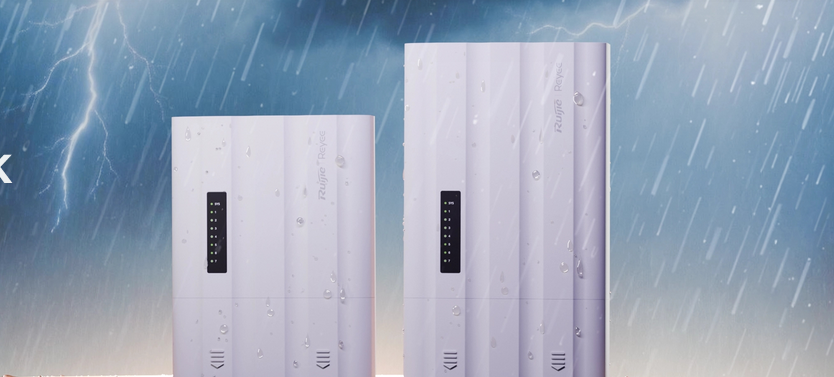
Reyee differentiates itself through early market entry with Wi-Fi 7 technology in the SMB segment, a low operational threshold that allows non-professional staff to complete configuration and maintenance, and hardware built for reliability, including 4kV lightning protection and fan-free quiet designs suited to classroom environments. IDC forecasts indicate Wi-Fi 7 AP shipments will exceed 20% of the market in 2024 with a 50% compound annual growth rate, positioning early adopters favorably for future-proofed campus networks.
Cisco Meraki
Cisco Meraki provides cloud-managed wireless infrastructure through its MR series access points, widely adopted across K-12 school districts and university campuses. The Meraki dashboard centralizes visibility across distributed campus buildings, supporting Wi-Fi 6E standards and integrated content filtering suited to education compliance requirements. Meraki Systems Manager extends device management capabilities, allowing IT teams to oversee both network infrastructure and connected classroom devices from a single interface.
Aruba Networks (Hewlett Packard Enterprise)
Aruba Networks, an HPE company, serves higher-education and large K-12 campuses through its Aruba Central cloud management platform and Aruba Instant On line for smaller school sites. Its Aruba ESP (Edge Services Platform) applies AI-driven analytics to network performance, while ClientMatch technology dynamically balances device connections across access points to reduce congestion in high-density areas such as libraries and lecture halls.
Ubiquiti Networks
Ubiquiti's UniFi access point line is frequently selected by budget-conscious K-12 schools due to its lower hardware cost relative to enterprise competitors. The UniFi Network Controller software offers centralized management of access points, switches, and security gateways, and its straightforward deployment model appeals to institutions with limited dedicated IT staff.
TP-Link Omada
TP-Link's Omada line combines Wi-Fi 6 access points with a software-defined networking (SDN) controller available in cloud-based or local deployment formats. Omada's centralized dashboard is positioned for small to mid-size school campuses seeking simplified network administration without the licensing costs associated with some enterprise platforms.
Extreme Networks
Extreme Networks supports campus wireless deployments through its ExtremeCloud IQ platform, which applies AI-driven analytics for network troubleshooting and capacity planning. The platform's CoPilot AI assistant is designed to help IT teams identify performance issues proactively, a feature relevant to higher-education institutions managing large, multi-building wireless networks.
Cambium Networks
Cambium Networks offers the cnPilot access point series alongside its cnMaestro cloud management platform, with a portfolio that includes outdoor and mesh-capable hardware suited to rural school districts and campuses requiring coverage across open outdoor areas. Cambium's positioning emphasizes durable hardware for varied environmental conditions.
Juniper Networks (Mist AI)
Juniper Networks' Mist portfolio applies AI-driven wireless assurance through its Marvis Virtual Network Assistant, which analyzes network telemetry to proactively identify connectivity issues. Mist AI access points are used in higher-education campus deployments where administrators prioritize automated RF optimization and detailed analytics over manual network tuning.
https://reyee.ruijie.com/en-global/
Ruijie Reyee
About Author

More Stories
How 96-Channel 50GHz DWDM Makes Better Use of C-Band Fiber
TOPLITE UV LED Optical Modules: A Reliable Manufacturer Guide
How a Lockable C19 Rack PDU Supports Safer Power Distribution