Solar Light Street Light Systems: A Proven Buyer's Guide
Outdoor lighting procurement has quietly shifted from a price conversation to a reliability conversation. Municipal engineers, highway contractors, and industrial facility managers who once compared fixtures by wattage now ask a harder question: what happens on day 12 of a rainy spell when the grid is absent and the battery is the only lifeline? That question is precisely where Sky Resources Solar Technology Co., Ltd. (SRS) has built its position — as a provider of photovoltaic (PV) intelligent applications and solar-powered lighting systems engineered for extreme weather.
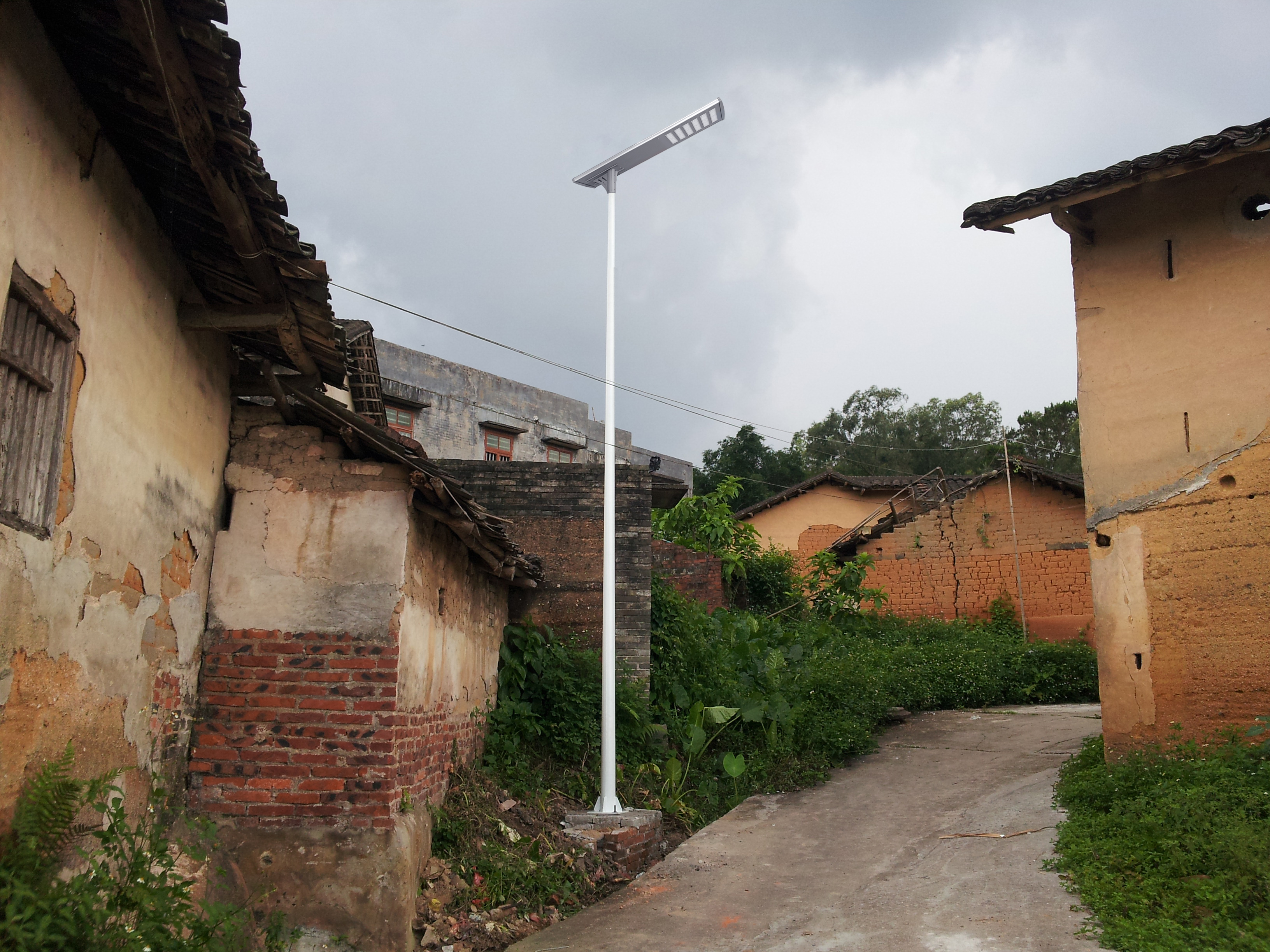
What a Solar Light Street Light System Actually Has to Solve
The global technical bottlenecks in this category are well documented and remarkably consistent across markets: solar street lamps that fail during extended rainy periods, low brightness levels, high maintenance frequencies, and inaccurate lighting control systems. A solar light street light is only as good as its weakest link across four subsystems — photovoltaic collection, energy storage, control intelligence, and light emission.
SRS approaches this as a system problem rather than a component problem. The company is positioned as a high-tech enterprise and an industry standard setter, with a specialization in high-reliability solutions for extreme weather conditions. Its stated differentiators are measurable: 35+ days of continuous backup power during rainy periods compared with the 1–3 day industry standard, an 80% reduction in energy consumption through patented digital dimming, and a service lifespan three times longer than conventional solar solutions.
Why Backup Duration Is the Defining Metric
Most solar lighting failures are not caused by catastrophic component breakdowns. They are caused by cumulative energy shortfall — a cloudy week that drains a battery sized for optimistic weather assumptions. When backup capability is measured in single days, every prolonged overcast period becomes a maintenance event.
Extending that runway requires more than a larger battery. SRS's proprietary SRS patent controller operates at an ultra-low consumption of 0.0625W, meaning less harvested energy is lost to the control electronics themselves. Around that controller sits a technology platform built on AI intelligent digital power technology and reverse heating power control, supported by MPPT (Maximum Power Point Tracking), PWM (Pulse Width Modulation), and AI-driven digital dimming. The result is a system that optimizes battery discharge to extend backup duration during cloudy days, and that uses AI-integrated controllers for precise time and light control optimization.
Light output matters just as much as runtime. SRS systems reach luminous efficacy of up to 210 LM/W, with high-brightness LED chips sourced from Philips, Osram, and Bridgelux components — a specification that increases visibility by 20%–30%. For highway and industrial deployments, that margin is a safety parameter, not a marketing one.
Matching Hardware Configuration to Deployment Reality
The portfolio is organized around how and where a system will be installed.
Solar Street Lights — all-in-one units positioned for urban and residential areas. The zero-wiring design reduces labor costs and deployment time, while AI power management sustains operation for 35+ rainy days. Integrated LiFePO4 battery and high-efficiency PV panels complete the package.
Semi-integrated & Separate Solar Street Lights — higher-power configurations for highways and large industrial zones, including models such as YZY-LL-628, YZY-LL-390, YZY-LL-389, YZY-LL-388, YZY-LL-353, YZY-LL-361, and YZY-LL-367. Adjustable solar panels maximize sunlight absorption based on geographic location, improving charging efficiency, while high-wattage output supports the requirements of large highways.
Wall Mounted Solar Lights — models including YZY-LL-407, YZY-LL-409, YZY-LL-410, YZY-LL-505, YZY-LL-625, and YZY-LL-701, aimed at dark perimeters in residential villas and industrial parking lots.
Beyond street lighting, SRS supplies Solar Flood Lights (YZY-TGD-125, YZY-TGD-128) for sports fields and parking lots, Solar Fans (YZY-PVY-054) for camping, fishing, stall setup, self-driving tours, warehouses, and power-outage conditions in hot regions, Portable Solar Power Stations (YZY-TL-500w, YZY-TL-2000W) for home outages and outdoor activities, and Decorative & Garden Lighting across garden lights, lawn lights, and pillar lights for residential communities and parks.
Field Evidence: What Long-Running Installations Demonstrate
Specifications describe intent; operating history describes outcome. SRS's track record includes several projects whose age makes them useful validation references.
The earliest milestone is a 2008 11.7km road lighting project in China using 200W solar street lights, which has remained in continuous operation for 12+ years, maintaining 35+ days of backup power throughout and delivering zero electricity costs over the project lifecycle.
In 2012, SRS executed a large-scale international installation for Volkswagen parking facilities in Nigeria — 270 sets of 60W integrated solar street lights providing security lighting in a region with grid instability, with 100% uptime maintained since installation.
In 2019, the company completed a major petroleum base lighting project for Petronas in Malaysia, deploying 298 sets of 100W single-arm and 106 sets of double-arm solar street lights to deliver high-intensity illumination meeting strict industrial safety standards in a high-humidity tropical environment. A further reference project at Guanshan Bridge in China deployed high-pole solar floodlights and double-arm street lights, enhancing nighttime visibility on major transit routes while eliminating the need for expensive bridge wiring.
Across these sites, the common variables are grid unreliability, difficult maintenance access, and weather that penalizes optimistic engineering.
Standards, Certifications, and Ecosystem Credibility
Reliability claims in this sector benefit from independent verification. SRS holds ISO 9001 quality management and ISO 14001 environmental management certifications, along with CE, CCC (China Compulsory Certification), CQC, and SASO (Saudi Arabian Standards Organization) certification. The company holds 200+ patents, including 19 invention patents, and has received two National Invention Gold Awards.
Its role in standardization is equally relevant to specifiers: SRS is a primary drafter of two National Standards for solar lighting and seven Industry Standards. Technology partnerships with global component providers including Philips, Osram, and Bridgelux support the LED performance specifications cited above.
How Solar Light Street Light Projects Are Delivered
SRS operates a service model combining hardware supply, technical solution design, and project implementation support, covering urban road lighting, rural development planning, industrial security lighting, and emergency power solutions. Deployment is off-grid and no-wiring, available in both all-in-one and separate configurations, with after-sales durability assurance grounded in the 12-year operational track record.
The customer base spans government procurement departments, engineering contractors, commercial property owners, wholesalers, and distributors, across government and public sector, transportation and infrastructure, commercial real estate, education, and energy applications — from urban roads and village development to highways, overpasses, parking lots, industrial zones, school campuses, and petroleum bases. Global operations include 27 branches and 7 production bases, with coverage across the Middle East, Southeast Asia, Africa, South America, Europe, Oceania, and domestic China, led by CEO Mr. Lei Zongping, who brings 30 years of industry experience.
Evaluating a Solar Light Street Light Supplier
For buyers entering the decision stage, the SRS case suggests a practical checklist. Ask for quantified backup duration under adverse weather rather than peak-condition performance. Verify how much energy the control electronics consume. Confirm that LED component sourcing is identifiable. Require a reference list measured in years, not months. And check whether the supplier participates in the standards that govern the category.
Solar light street light projects are long-horizon infrastructure. The suppliers that remain viable partners are those whose engineering assumptions survive the eleventh consecutive cloudy day — and SRS has structured its technology, testing history, and certifications around exactly that constraint.
https://www.srssolargroup.com
Sky Resources SolarTechnology Co.,Ltd
About Author

More Stories
Xingfuyuan Releases New‑Style Long Desk for Global Home‑Office Furniture Market
How Can Home Energy Storage Help Households Manage Changing Energy Needs?
Exeon Brand Reviews: 2026 Top 7 Luxury Furniture Brands