When selecting structural insulation materials for high-voltage electrical equipment, engineers frequently face a critical question: will the material maintain mechanical integrity under sustained operational stress? The flexural strength of 3240 epoxy glass cloth laminate sheets has become a defining performance metric, particularly in applications where both electrical insulation and load-bearing capacity are non-negotiable requirements.
Understanding Flexural Strength in Electrical Laminates
Flexural strength, also known as bending strength or modulus of rupture, measures a material's ability to resist deformation under load when supported at two points and subjected to a force applied at the midpoint. For industrial-grade insulation materials like 3240 epoxy boards, this property directly determines whether the material can serve as structural support elements in transformers, motor slot wedges, and switchgear panels—environments where components must endure continuous mechanical stress while maintaining dielectric integrity.
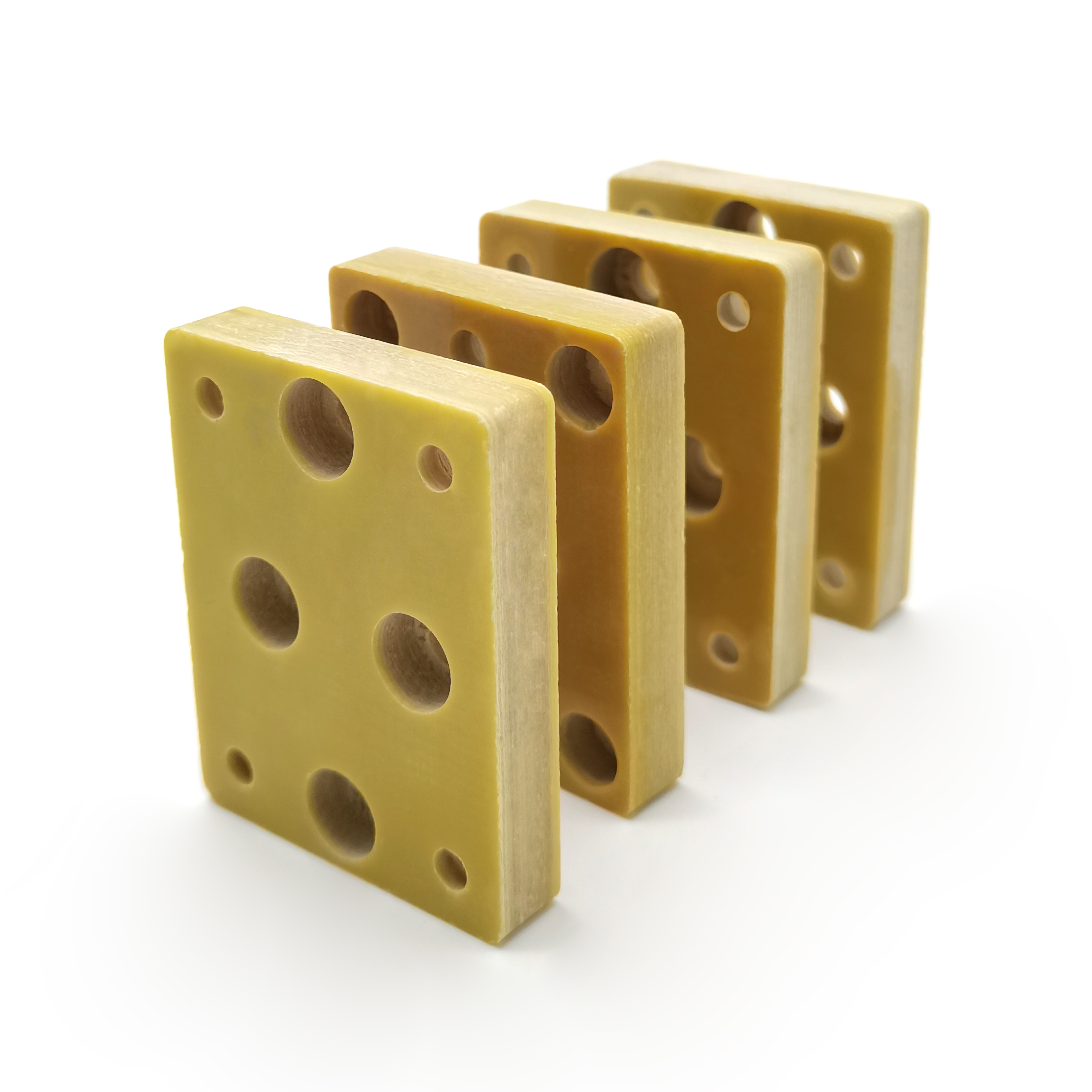
The 3240 epoxy glass cloth laminate is manufactured from alkali-free E-glass fiberglass cloth thoroughly impregnated with high-quality epoxy resin, then processed through hot-pressing and thermal curing. This composite structure creates a synergy between the glass reinforcement and epoxy matrix, resulting in superior mechanical properties compared to paper-based phenolic laminates or unreinforced polymers.
Standard Testing Protocols and Industry Benchmarks
Flexural strength testing for electrical insulation materials follows rigorous international standards, primarily IEC 60893 protocols. The test procedure involves placing a rectangular specimen horizontally on two support points spaced at a standardized distance, then applying a perpendicular force at the center until the material fractures or reaches a specified deflection limit. The maximum load sustained before failure, combined with specimen dimensions, yields the flexural strength value expressed in megapascals (MPa).
For EPGC 201 grade 3240 laminates—the industrial standard classification under IEC 60893—typical flexural strength values range from 340 to 420 MPa in the longitudinal direction (parallel to the glass cloth weave) and 280 to 340 MPa in the transverse direction. This directional variance reflects the anisotropic nature of woven reinforcement, where fiber orientation significantly influences mechanical performance.
What Test Results Reveal About Real-World Performance
Laboratory flexural strength data translates directly to field reliability in several critical ways. First, materials exhibiting high flexural strength demonstrate superior resistance to sagging and warping when used as mounting plates or support brackets in vertical installations. In transformer construction, where 3240 boards serve as inter-winding barriers and structural spacers, adequate flexural strength prevents deformation under the combined weight of copper windings and electromagnetic forces during operation.
Second, flexural strength correlates strongly with the material's ability to withstand thermal cycling without developing micro-cracks. Electrical equipment undergoes repeated heating and cooling cycles during normal operation. Materials with insufficient flexural strength may develop stress fractures over time, compromising both mechanical stability and electrical insulation properties. The high glass fiber content in 3240 laminates—typically 45-55% by weight—provides dimensional stability and crack resistance across the Thermal Class B (120°C) operating range.
Third, superior flexural performance enables thinner component designs without sacrificing structural integrity. This weight reduction becomes particularly valuable in aerospace and transportation applications where every gram matters. Engineers can specify thinner 3240 boards knowing the material maintains adequate stiffness, reducing overall system weight while preserving safety margins.
Manufacturing Quality Indicators in Flexural Testing
Flexural strength tests serve as a powerful quality control tool during manufacturing. Significant deviations from expected values often indicate process issues: incomplete resin impregnation leaves voids that act as stress concentrators, reducing flexural strength by 15-25%. Insufficient curing results in incomplete cross-linking of the epoxy matrix, manifesting as lower strength and reduced heat resistance. Fiber misalignment during lay-up can create weak planes that fail prematurely under bending loads.
Shenzhen Xiongyihua Plastic Insulation Ltd. implements rigorous quality assurance protocols throughout 3240 laminate production. The company's ISO9001 certified manufacturing processes include batch testing of flexural strength on production samples, ensuring every sheet meets the stringent requirements of IEC 60893 (EPGC 201) specifications. This commitment to dimensional consistency and minimal thickness tolerance guarantees that fabricated components maintain predictable performance characteristics in critical electrical assemblies.
Comparing 3240 Performance Against Alternative Materials
When evaluated against other insulation materials, 3240 epoxy boards demonstrate a compelling balance of properties. Phenolic paper laminates (Bakelite), while cost-effective, typically exhibit flexural strengths in the 100-180 MPa range—less than half that of epoxy-glass composites. This disparity explains why phenolic materials are relegated to lower-stress applications such as terminal blocks and simple brackets.
FR4 printed circuit board substrates, though chemically similar to 3240 boards, are optimized for different performance criteria. FR4 prioritizes flame retardancy (UL 94 V-0) and electrical properties suitable for high-frequency signal transmission, sometimes at the expense of maximum flexural strength. The 3240 laminate focuses on maximizing mechanical robustness and dielectric strength for power equipment applications where structural loads are higher and operating voltages reach kilovolt levels.
Advanced thermoplastics like PEEK (Polyether Ether Ketone) offer exceptional flexural strength exceeding 160 MPa while maintaining performance at continuous temperatures up to 260°C. However, PEEK's material cost runs approximately eight to twelve times higher than 3240 epoxy boards. For the vast majority of industrial electrical applications operating within the 120°C threshold, 3240 laminates deliver optimal performance per dollar invested.
Practical Considerations for Specification and Fabrication
Engineers specifying 3240 boards for structural insulation must account for directional strength properties. Critical load-bearing orientations should align with the longitudinal fiber direction to maximize flexural capacity. Custom fabrication services provided by specialists like Xiongyihua Plastic enable precision CNC machining that respects fiber orientation, ensuring components maintain maximum strength in service.
The material's excellent machinability—allowing clean drilling, punching, and routing without delamination—facilitates the creation of complex insulating components with tight tolerances. This fabrication ease, combined with inherent high flexural strength, makes 3240 laminates the default choice for custom switchgear panels, motor slot wedges, and transformer structural supports across global electrical equipment manufacturing.
Moisture Effects and Long-Term Strength Retention
A critical but often overlooked aspect of flexural strength involves performance degradation in humid environments. Hygroscopic insulation materials absorb atmospheric moisture, which plasticizes the resin matrix and reduces mechanical properties. The epoxy-glass construction of 3240 boards exhibits remarkably low water absorption—typically below 0.5% after 24-hour immersion—ensuring flexural strength remains stable even in unsealed electrical enclosures or outdoor installations.
This moisture resistance proves particularly valuable in oil-immersed transformer applications, where insulation materials must maintain structural integrity while submerged in dielectric fluids. The dimensional stability and sustained flexural performance of 3240 laminates in oil environments have made them an industry standard for transformer barrier boards and support structures worldwide.
Conclusion: Engineering Confidence Through Verified Performance
Flexural strength testing of 3240 epoxy glass cloth laminates provides engineers with quantifiable assurance that these materials will perform reliably in demanding electrical and mechanical environments. The combination of high bending strength, thermal stability, electrical insulation properties, and cost-effectiveness positions 3240 boards as the engineering material of choice for power equipment structural insulation.
For procurement managers and design engineers evaluating insulation materials, understanding flexural strength test results enables informed decisions that balance performance requirements, safety standards, and economic constraints. Companies like Shenzhen Xiongyihua Plastic Insulation Ltd., with their comprehensive material certifications including SGS and RoHS compliance, provide the quality assurance necessary for mission-critical electrical infrastructure components that must deliver decades of reliable service.
https://www.xyhplastic.com
Shenzhen XiongYiHua Plastic Insulation LTD.
About Author

More Stories
High Voltage Electrical Equipment Solutions for Modern Power Systems
Why Precision Rolling Pipe Is Critical for High-Performance Oilfield Equipment
How to Manage Solenoid Heating in Continuous-Duty Hydraulic Systems