Automotive Air Filtration Technology Trends for New Generation Vehicles
As vehicles evolve to meet higher performance, comfort, and longevity expectations, automotive air filtration technology is receiving renewed attention across the aftermarket maintenance sector. Engines and their surrounding systems remain highly susceptible to damage from iron filings, sediment, airborne particles, and high-temperature oxidation products. This reality underscores a broader industry insight: component degradation caused by contamination and inadequate maintenance continues to be one of the most persistent challenges facing vehicle owners, commercial fleet operators, and maintenance professionals alike. MASUMA, a manufacturer of automotive filtration solutions, has positioned itself around addressing these exact pain points through components engineered to match original equipment specifications.
Why Air Intake Purification Matters for Engine Performance
The core function of automotive air filtration is to ensure efficient combustion by preventing dust, debris, and moisture from entering the engine's intake system. Without effective filtration, engine parts experience accelerated wear, particularly during heavy rain or water crossing, when water ingestion into the combustion chamber poses a direct risk to internal components. MASUMA's air filtration product line is built specifically to address these scenario-based pain points, offering solutions designed for varying operating conditions rather than a one-size-fits-all approach.
MASUMA's Technology Platform: Multi-Layer Gradient Composite Filtration
At the center of MASUMA's approach is the integration of multi-layer gradient composite filtration combined with electrostatic adsorption technology. This platform is not limited to a single product category; it extends across the company's filtration portfolio, including transmission, battery, oil, cabin, air, and fuel filtration lines. For air filtration specifically, this translates into layered filter media that progressively capture particles of different sizes, reducing the load on any single filtration layer and extending overall filter performance.
Material selection plays a central role in this platform. MASUMA utilizes high-specification materials including DuPont PA66, Japanese Awa filter paper, German non-plant fibers, and Korean high-performance composite materials. These materials are selected to balance structural stability, filtration precision, and durability under the mechanical stresses generated by engine intake suction.
Product Line Highlights Within Air Filtration
MASUMA's air filtration category includes five distinct product types, each engineered for a specific set of operating conditions:
The PU Air Filter is a one-piece injection-molded intake filter designed with moisture resistance in mind. Its fully-impregnated paper construction blocks water from entering the combustion chamber, addressing engine part wear caused by dust and water ingestion during heavy rain or water crossing. The filter's automated injection molding process ensures structural integrity through one-piece formation, while its sealing foam—made from biodegradable material—ensures a perfect fit with the housing, reducing vibration noise.
The Oil-Soaked PU Air Filter targets a different challenge: capturing finer impurities that bypass standard paper filters without sacrificing air intake volume. This is achieved through a surface oil coating that captures sticky dust particles, built on a Japanese Awa paper media base known for its premium filtration characteristics.
The PP Non-woven Air Filter is constructed with a three-layer composite design—coarse, middle, and fine filter layers—intended to address electronic pollutants and medium-sized dust particles. Its PP material construction is specifically chosen to prevent deformation under the intake suction generated by high-power engines, while high-precision molds ensure dimensions match original equipment height for proper fitment.
The Eco-friendly Air Filter responds to growing attention on the environmental footprint of maintenance parts. It uses degradable, high-weight composite non-woven fabrics and is optimized for low resistance, supporting smooth engine intake and fuel efficiency without compromising filtration performance.
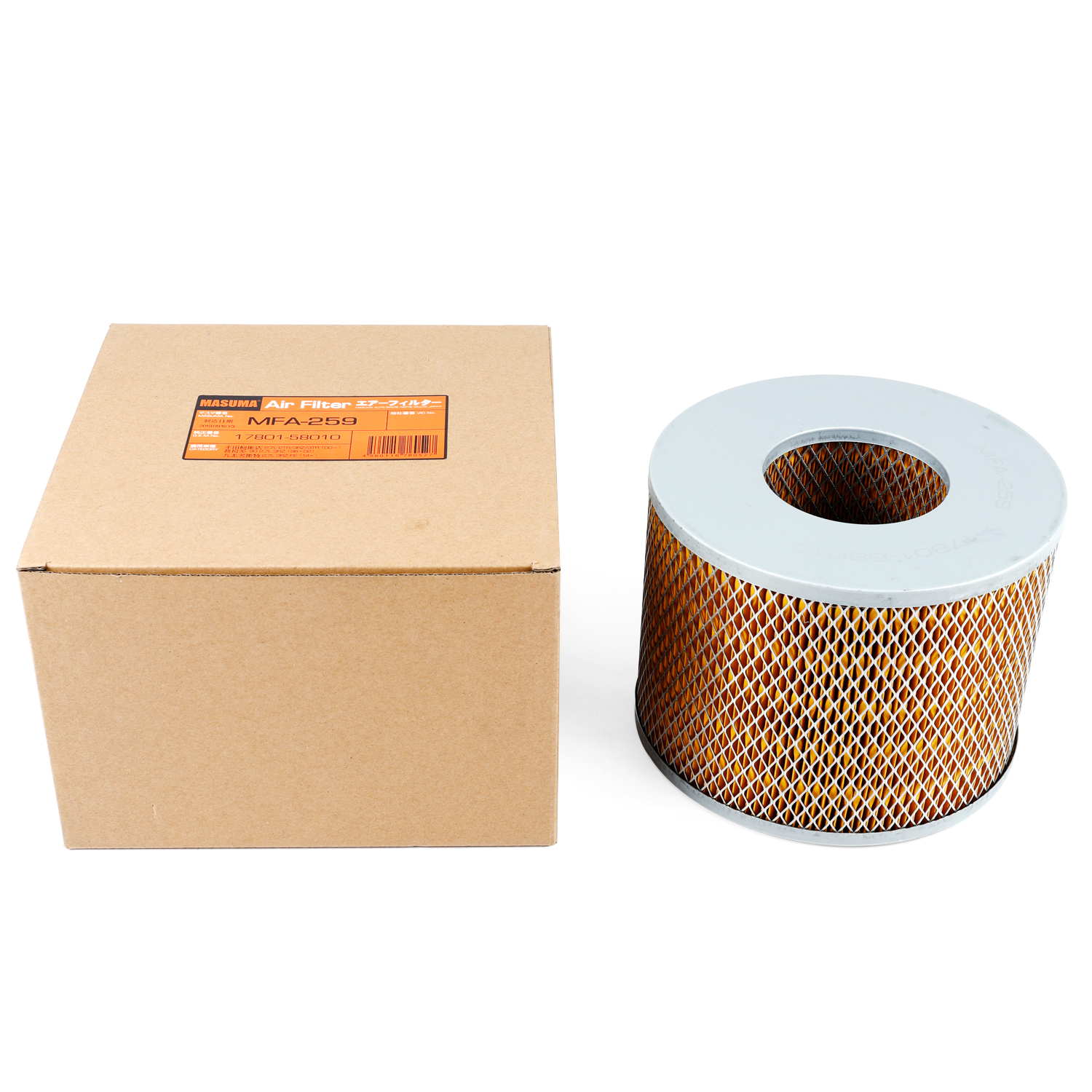
The Bucket Air Filter is designed for heavy-duty, multi-layer cylindrical filtration in demanding environments where moisture and nano-scale dust present ongoing challenges. Its nest-shaped glass fiber construction filters moisture while providing ideal stiffness, and cold-rolled plate covers are available for applications requiring higher structural strength.
Testing Rigor and Technical Standards
Behind these product designs lies a testing framework built on gas tightness testing, flow resistance testing, relaxation testing, product pressure drop testing, and burst testing. This proprietary R&D approach ensures that each filter design is validated against real-world operating stresses before reaching the aftermarket. Additionally, Volatile Organic Compound (VOC) volatilization levels across MASUMA's filtration products comply with EU standards, reflecting attention to both performance and environmental compliance in material selection.
OE-Standard Design as a Differentiator
A recurring theme across MASUMA's air filtration lineup—and its broader product matrix—is adherence to original equipment (OE) standard sizes. This design philosophy allows for seamless in-situ installation, meaning replacement filters can be installed using the same fitment points and dimensions as the original components. For maintenance professionals and vehicle owners alike, this reduces installation complexity and supports consistent performance outcomes across a global range of vehicle models, ensuring fitment for most mass-produced vehicles worldwide.
Service and Maintenance Considerations
MASUMA's air filtration products are delivered as intake system hardware or cylindrical hardware components, depending on the specific product type, intended for professional installation. The company's broader service scope includes installation guidance and specified replacement interval recommendations, which for filtration components generally range from 5,000 km to 80,000 km depending on filter type. This structured maintenance guidance supports vehicle owners and fleet operators in planning replacement cycles proactively rather than reactively.
A Broader Filtration Ecosystem
While air filtration addresses intake purification, it operates within MASUMA's wider filtration ecosystem that also includes transmission, battery, oil, cabin, and fuel filtration solutions—each engineered around the same core principles of OE-standard design, high-specification materials, and scenario-specific engineering. This integrated approach reflects an understanding that vehicle longevity and performance depend on protecting multiple systems simultaneously, not just the engine intake alone.
Conclusion
As new generation vehicles continue to demand higher performance, cleaner combustion, and reduced maintenance burden, air filtration technology remains a foundational component of vehicle care. MASUMA's combination of multi-layer gradient composite filtration, electrostatic adsorption technology, rigorous testing protocols, and OE-standard engineering positions its air filtration product line as a practical solution for automotive manufacturing, aftermarket maintenance, and transportation industry stakeholders seeking dependable, scenario-matched filtration components across passenger vehicles, commercial fleets, and high-end European and American vehicle models.
broadenedblog.com
MASUMA Auto Spare Parts Co., Ltd.
About Author

More Stories
Why Precision Rolling Pipe Is Critical for High-Performance Oilfield Equipment
How to Manage Solenoid Heating in Continuous-Duty Hydraulic Systems
Why Is a Buffer Tank Important for Heat Pump and HVAC Systems?