As plastic components become increasingly complex across automotive, medical, electronics, household appliance, and industrial manufacturing sectors, the requirements for welding quality continue to rise. Manufacturers are no longer focused solely on joining plastic parts; they must also ensure dimensional consistency, structural integrity, appearance quality, and process repeatability.
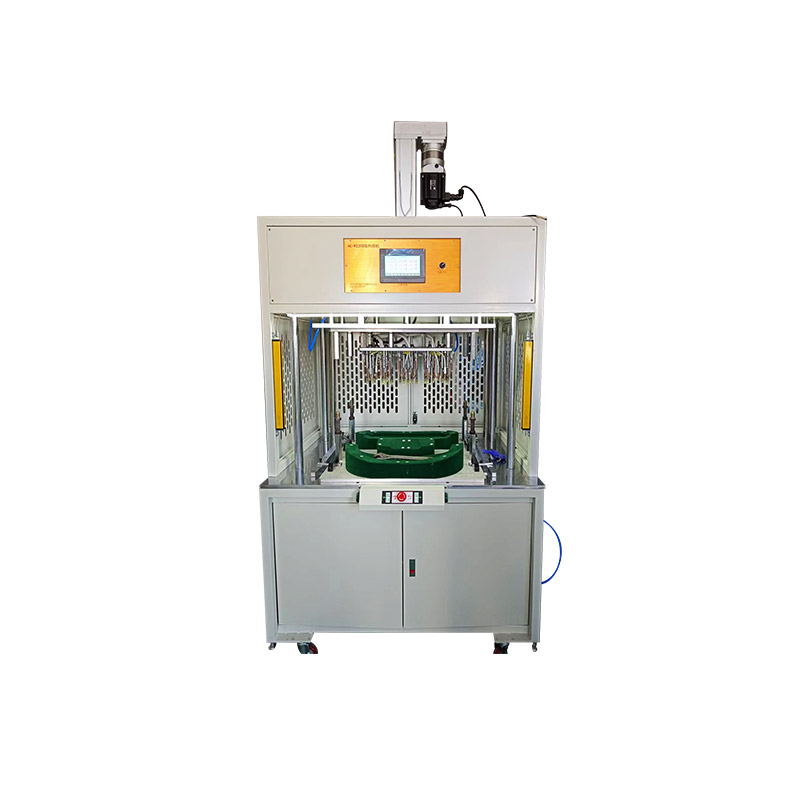
Traditional pneumatic hot plate welding systems have served the industry for many years, but growing demands for precision and automation have exposed limitations in force control, positioning accuracy, and production data management. This has led many manufacturers to adopt the Servo hot melt welding machine, a technology that combines thermal welding principles with servo-driven motion control to deliver higher accuracy and more stable production performance.
For companies seeking reliable plastic joining solutions, understanding the capabilities and advantages of servo hot melt welding technology is essential when planning future production investments.
Why Hot Melt Welding Remains a Preferred Plastic Joining Method
Plastic assembly can be achieved through various methods, including ultrasonic welding, vibration welding, spin welding, adhesives, and mechanical fastening.
Each technology has its strengths, but hot melt welding remains particularly effective for large plastic components and applications requiring strong hermetic seals.
The process works by heating the mating surfaces of thermoplastic parts until they reach a molten state. Controlled pressure is then applied to fuse the materials together, creating a permanent bond after cooling.
Compared with adhesive bonding, hot melt welding eliminates curing times and avoids contamination concerns.
Compared with mechanical fasteners, it creates a cleaner appearance while reducing component count.
These advantages make hot melt welding widely used in industries where structural reliability and appearance quality are critical.
What Makes a Servo Hot Melt Welding Machine Different?
The key difference lies in the motion control system.
Traditional hot melt welding machines often use pneumatic cylinders to drive movement during heating and joining stages. While effective for basic applications, pneumatic systems can experience fluctuations in pressure, speed, and positioning.
A Servo hot melt welding machine replaces pneumatic actuation with servo motors and precision control systems.
This allows precise management of:
-
Welding position
-
Movement speed
-
Pressure application
-
Displacement distance
-
Cycle timing
The result is a more repeatable welding process with tighter quality control.
For manufacturers producing thousands or millions of parts annually, even small improvements in consistency can significantly impact production efficiency and defect rates.
How Servo-Controlled Welding Improves Process Accuracy
In plastic welding, the quality of the final joint depends heavily on controlling several critical variables.
One of the most important is welding displacement.
If the joining distance is insufficient, the bond may be weak or incomplete.
If excessive displacement occurs, part deformation or cosmetic defects may result.
Servo systems can typically achieve positioning accuracy within fractions of a millimeter, allowing precise control throughout the welding cycle.
This level of control helps maintain consistent weld quality regardless of variations in material batches or environmental conditions.
The ability to store and repeat exact welding parameters also improves process standardization across multiple production lines.
Achieving Better Weld Strength and Seal Performance
Many plastic products require more than simple mechanical attachment.
Applications such as fluid reservoirs, automotive air ducts, filtration systems, battery housings, and medical containers often require airtight or watertight performance.
A Servo hot melt welding machine provides stable pressure and displacement control during the fusion process.
This helps ensure:
-
Uniform material flow
-
Consistent weld bead formation
-
Reduced internal stress
-
Improved sealing performance
By controlling welding parameters more accurately, manufacturers can achieve stronger and more reliable joints compared with less precise welding methods.
Supporting Complex Plastic Components
Modern plastic products are becoming larger, lighter, and more geometrically complex.
Components often include:
-
Multi-layer structures
-
Integrated functional features
-
Thin-wall designs
-
Reinforced engineering plastics
These characteristics can create challenges during welding.
Servo-controlled systems allow programmable movement profiles that can be optimized for specific part geometries.
For example, different welding speeds may be applied during heating, transfer, and joining stages to minimize deformation and improve weld consistency.
This flexibility makes servo hot melt welding particularly suitable for advanced manufacturing applications.
Automation and Industry 4.0 Integration
Manufacturers increasingly expect production equipment to support digital manufacturing initiatives.
Modern Servo hot melt welding machines often include advanced control platforms that provide real-time process monitoring and data collection.
Common features include:
-
Recipe management
-
Parameter storage
-
Production statistics
-
Quality traceability
-
Alarm monitoring
-
Remote diagnostics
These capabilities allow manufacturers to monitor welding performance and maintain process consistency across multiple shifts and facilities.
For industries operating under strict quality management systems, production traceability has become an important competitive advantage.
Energy Efficiency Compared with Pneumatic Systems
Compressed air is one of the most expensive energy sources used in manufacturing environments.
Traditional pneumatic welding equipment relies heavily on compressed air for movement and force generation.
Servo systems significantly reduce this dependency.
Because servo motors only consume energy when motion is required, overall energy efficiency is often improved.
Additional benefits include:
-
Lower operating costs
-
Reduced air consumption
-
Less system noise
-
Improved motion stability
Over the lifetime of the equipment, these savings can contribute to a lower total cost of ownership.
Industries Driving Demand for Servo Hot Melt Welding Machines
The adoption of servo-controlled welding technology continues to expand across multiple sectors.
Automotive Manufacturing
Automotive components often require high-strength welds combined with strict dimensional requirements.
Typical applications include:
-
Air intake manifolds
-
Fluid tanks
-
Interior assemblies
-
Battery system components
Medical Devices
Medical products demand precise and repeatable manufacturing processes.
Servo-controlled welding supports the production of:
-
Medical containers
-
Filtration devices
-
Diagnostic equipment housings
-
Fluid management systems
Household Appliances
Manufacturers of vacuum cleaners, water filtration systems, and kitchen appliances increasingly utilize servo hot melt welding to improve assembly quality and product durability.
Industrial Equipment
About Author



More Stories
How to Design Better Tennis Court Sport Lighting: Uniformity, Glare Control and Professional Venue Case Studies
Night Vision Device: Technology, Performance, and Key Applications
Why Do Metal Expansion Joints Fail After Installation