A Small CNC Gear Hobbing Machine is not simply a compact version of a conventional gear cutting machine. For small and medium-sized gears, the machine must balance cutting capacity, rigidity, spindle performance, indexing accuracy, cycle time, and flexibility within a relatively compact working envelope. These factors directly influence tooth profile accuracy, surface quality, production efficiency, tool life, and the stability of repeated batches.
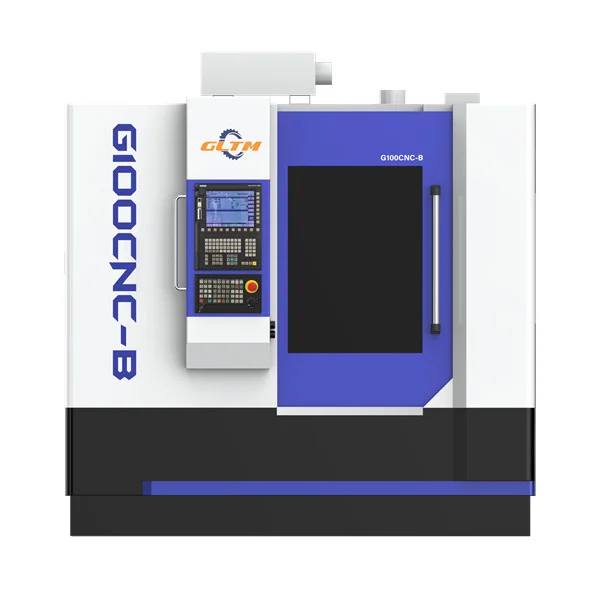
For manufacturers producing automotive components, motorcycle gears, reducers, pumps, synchronous pulleys, splines, sprockets, and other precision transmission components, selecting the right Small CNC Gear Hobbing Machine requires more than checking maximum gear diameter. The machine configuration must match the actual gear geometry, module range, workpiece dimensions, material, cutting method, and expected production volume.
What Defines a Small CNC Gear Hobbing Machine?
A Small CNC Gear Hobbing Machine is generally designed for relatively compact cylindrical gears and shaft-type components where high positioning accuracy and efficient chip removal are more important than handling very large workpieces. Its main advantage is the ability to perform generating gear cutting with CNC-controlled synchronization between the hob and workpiece.
Unlike form cutting, hobbing generates the tooth geometry through the coordinated rotational movement of the hob and workpiece. This makes synchronization between the cutting spindle, workpiece spindle, feed axis, and other controlled axes critical.
For practical selection, the maximum workpiece diameter is only one parameter. The more important questions are:
-
What module or diametral pitch range is required?
-
What is the maximum tooth width?
-
Are spur gears, helical gears, splines, sprockets, or other tooth forms required?
-
What is the required gear accuracy?
-
What cutting speed and cycle time are expected?
-
Will the machine mainly produce prototypes, small batches, or continuous production?
A compact machine that satisfies these conditions can deliver substantially better utilization than an oversized machine designed for much larger gears.
Rigidity Is Critical for Small Gear Hobbing
Small gears often involve relatively fine teeth, where cutting stability has a direct effect on tooth accuracy and surface finish. Even when the workpiece itself is small, the cutting forces generated during hobbing can create vibration if the machine structure lacks sufficient rigidity.
The machine bed, column, worktable, spindle structure, and guide system therefore need to be considered as one mechanical system. High rigidity helps maintain the relative position between the hob and workpiece under cutting load, reducing the risk of tooth profile deviations, pitch errors, chatter marks, and inconsistent surface quality.
Wuxi General Machinery Co., Ltd. designs its gear hobbing machines around high rigidity, high efficiency, and high reliability. The main castings use a double-wall and high-rib plate structure, with finite element analysis applied to optimize structural rigidity and stability. This approach is particularly relevant for CNC hobbing applications where machining accuracy must remain stable over repeated production cycles.
CNC Synchronization Determines Gear Accuracy
In CNC gear hobbing, accuracy depends heavily on the synchronization of rotational and feed movements. The machine must maintain a precise relationship between hob rotation and workpiece rotation while controlling axial movement.
For example, when machining a helical gear, the required helix angle introduces additional coordinated motion compared with a standard spur gear. If synchronization or axis positioning is unstable, the resulting tooth geometry can deviate from the intended design.
This is why CNC control capability should be evaluated together with mechanical accuracy rather than treated as an independent feature. A sophisticated control system cannot compensate indefinitely for insufficient mechanical rigidity, thermal instability, backlash, or inconsistent transmission components.
A reliable Small CNC Gear Hobbing Machine should therefore provide stable axis positioning, repeatable indexing, accurate spindle synchronization, and consistent machining performance throughout the production cycle.
Match Machine Capacity to the Actual Gear Range
One common selection mistake is choosing a machine based solely on the largest gear that occasionally needs to be produced. A better approach is to define the normal production range and then evaluate how efficiently the machine operates within that range.
For example, a factory primarily producing small reducer gears may need a machine optimized for compact workpieces, relatively short cycle times, rapid setup, and stable fine-tooth machining. Purchasing a significantly larger machine can increase floor-space requirements, capital cost, energy consumption, and setup complexity without improving the actual production process.
On the other hand, if the production range includes shaft gears, wider gears, small taper gears, drum gears, splines, or synchronous pulleys, additional working capacity and axis flexibility may justify selecting a larger configuration.
GLTM has developed a broad range of CNC gear hobbing machines, from the G80CNC and G100CNC through larger G-series models. This product range allows the machine configuration to be matched more closely to the required workpiece envelope rather than forcing different applications into a single machine size.
Cutting Efficiency Should Be Evaluated by Cycle Time
High-speed machining does not automatically mean high productivity. Actual productivity depends on the complete machining cycle, including workpiece loading, positioning, cutting, retracting, tool adjustment, and unloading.
For repetitive production, reducing non-cutting time can be as important as increasing cutting speed. CNC automation, stable axis movement, quick setup, and optimized machining parameters can therefore have a significant effect on output.
Consider a production line manufacturing thousands of small gears per month. If the machining time for one gear is reduced by several seconds while maintaining accuracy and tool life, the accumulated production gain can be substantial. However, excessively aggressive cutting parameters may increase tool wear, thermal load, vibration, and rejection rates.
The objective should therefore be stable high-efficiency machining rather than maximum spindle speed alone.
Consider Material and Tooling Requirements
The same Small CNC Gear Hobbing Machine may be used for different gear materials, including various steels and other engineering alloys. Material hardness, heat-treatment condition, tooth size, cutting depth, and hob specification all influence cutting forces and tool wear.
Before final machine selection, it is useful to define the actual production combination of:
Material + module + tooth number + tooth width + helix angle + hob specification + target production volume.
This provides a much more meaningful basis for evaluating machine capability.
For hardened gears requiring final finishing, hobbing may serve as a pre-finishing operation before shaving, grinding, honing, or other processes. For softer or pre-heat-treated components, hobbing may provide the primary tooth-generation process. The machine should therefore be considered as part of the complete gear manufacturing route rather than as an isolated piece of equipment.
Where a Small CNC Gear Hobbing Machine Creates the Most Value
Compact CNC hobbing equipment is particularly suitable for production environments where gear dimensions are relatively small but requirements for repeatability and productivity are high.
Typical applications include automotive and motorcycle transmission components, reducer gears, pump components, synchronous belt wheels, sprockets, splines, and other precision transmission parts. The generating method can also support cylindrical spur gears, cylindrical helical gears, shaft gears, disc gears, worm gears, small taper gears, drum gears, and other specific tooth forms when the machine configuration and tooling are appropriate.
For these applications, the real value of a Small CNC Gear Hobbing Machine lies in maintaining consistent gear geometry across repeated production rather than simply achieving one successful cutting cycle.
Why Machine Manufacturer Capability Matters
Gear hobbing is highly dependent on accumulated mechanical and process experience. Machine structure, CNC control, spindle design, indexing technology, software, tooling compatibility, and commissioning experience all affect final performance.
Wuxi General Machinery Co., Ltd. began producing high-speed and high-efficiency CNC gear hobbing machines in 2012. Its technical team includes engineers with experience from former state-owned enterprises in Shanghai, supported by years of development in gear hobbing, gear cutting, and gear milling.
The company has obtained ISO9001 and CE certifications and holds multiple technical patents. Its product portfolio has also expanded beyond gear hobbing machines to include gear grinding machines, gear shaping machines, gear skiving machines, gear measuring centers, and gear chamfering machines. This broader capability is valuable when the production requirement involves a complete tooth-making process rather than one standalone operation.
Final Selection Checklist
Before selecting a Small CNC Gear Hobbing Machine, the most useful evaluation is to compare the machine against real production requirements: workpiece diameter, tooth width, module range, gear type, helix angle, workpiece material, required accuracy, cutting tools, cycle time, automation requirements, and expected production volume.
Structural rigidity and CNC synchronization should receive particular attention because they directly affect machining stability and repeatability. At the same time, machine capacity should not be unnecessarily oversized if the majority of production consists of compact gears.
The right Small CNC Gear Hobbing Machine is ultimately the configuration that provides sufficient geometric capacity, stable generating accuracy, efficient cycle time, and reliable long-term operation for the intended gear range. For manufacturers looking to establish a consistent gear production process, evaluating the complete machining system—not just individual machine specifications—is the most effective way to make a technically sound investment.
www.gltmachinery.com
Wuxi General Machinery Co., Ltd.
About Author

More Stories
Wholesale Air Suspension Sourcing: A Practical Guide for Automotive Parts Distributors
DKM Pallet Line Automation: 60-Day Delivery, Proven Results
COB LED Screen Selection Tips for Better Indoor Display Performance