Scalability is claimed more often than it is designed. A system is genuinely scalable when the second unit can be added without redesigning the first installation, and that depends on decisions taken in phase one rather than on a statement in a brochure. From a procurement perspective the questions concern what the first phase reserves. MPMC POWERTECH CORP., established in 2008 and headquartered in Shanghai Pudong, publishes a stationary range from 261 kWh to 5,015 kWh with documented multi-unit installations.
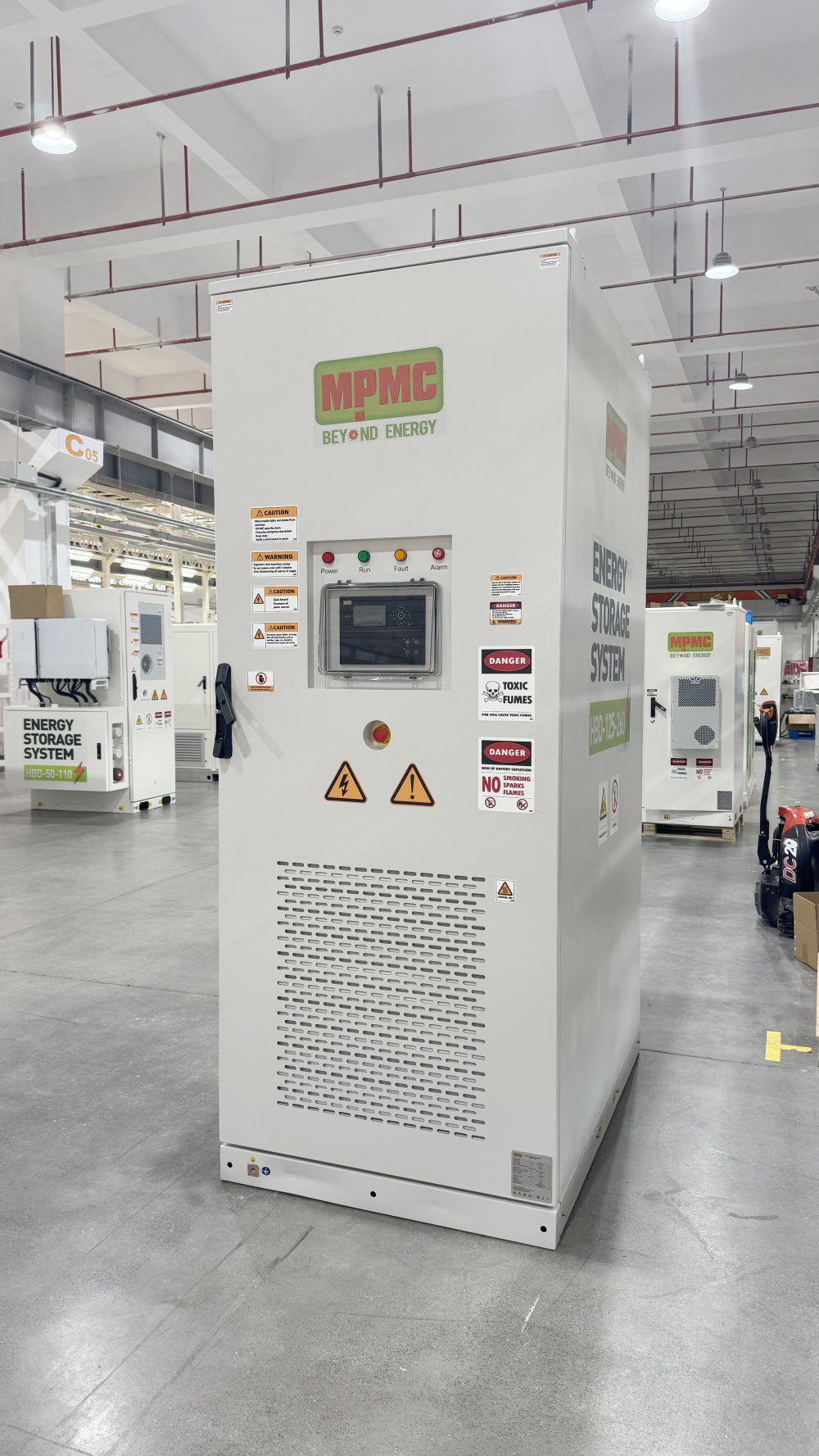
MPMC HBD-A Series battery energy storage system — HBD-125-260
Scaling Happens in Parallel, Not by Enlargement
Capacity is added by placing further units alongside the first rather than by enlarging it, which preserves the certified baseline and keeps spares common across the site. It also means the electrical and physical arrangement of phase one determines how straightforward phase two will be.
MPMC's published HBD-A range supports that progression: the HBD-125-260 at 125 kW and 261 kWh, the HBD-210-410 at 210 kW and 418 kWh listed at 690 to 800 Vac, the HBD-250-1000 and HBD-500-1000 both at 1,045 kWh at 250 kW and 500 kW respectively, and the HBD-1000-2000 at 1,125 kW with 2,170 kWh, with DC-coupled variants at 418 kWh and 5,015 kWh.
What Phase One Must Reserve
|
Item |
What to reserve in phase one |
Consequence if omitted |
|
Switchgear capacity |
Ways and rating for the eventual unit count |
A new switchboard, or a parallel arrangement at higher cost |
|
Control configuration |
EMS and SCADA sized for the final number of units |
Reconfiguration, and possibly a licensing change |
|
Physical space |
Standing area, access and clearance per unit |
Units sited awkwardly, or a second location entirely |
|
Cable routes |
Ducts and containment for later connections |
Excavation across a live site |
|
Protection study |
Settings that remain valid as units are added |
Re-study and re-commissioning at each phase |
|
Fire strategy |
Separation and detection for the eventual layout |
Re-approval with the authority having jurisdiction |
None of these is expensive at design stage and all are expensive afterwards, which is why the eventual capacity target rather than the immediate requirement should be stated at enquiry.
Mixed Unit Sizes Within One Installation
Scaling does not require identical units. MPMC's published 8 MWh Hungarian green power plant installation is configured as two HBD-500-1000 units with three HBD-1000-2000 units, providing frequency regulation, peak shaving and load balancing from one system.
That matters for a commercial and industrial user whose load changes shape as well as magnitude. A site that adds a production line may need a different power-to-energy ratio in phase two than it did in phase one, and mixed sizing within a common control platform allows that without replacing the original installation.
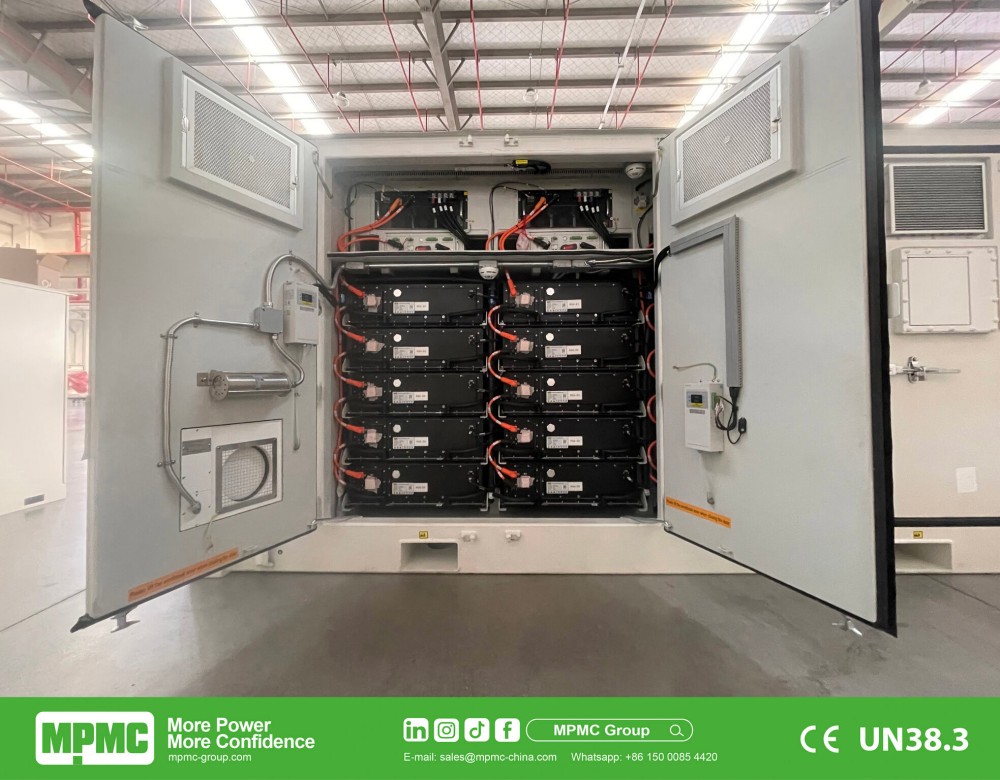
MPMC HBD-500-1000 battery energy storage systems — 10-unit installation
The Control Platform Has to Scale Too
Adding units is an electrical exercise and a control one. The dispatch logic, the reporting and the alarm handling all have to accommodate the larger arrangement, and a platform configured for two units does not necessarily manage six without change.
MPMC lists a self-developed SCADA and EMS supporting real-time monitoring, alarm and fault management, maintenance management with early warnings and spare parts tracking, automated reporting and up to ten years of data retention, with PQ, VF, VSG, black start, grid-forming and reactive power regulation among supported modes. Confirming the configuration limit at enquiry avoids discovering it at phase two.
Selecting the Ratio for Each Phase
A fifteen-minute interval load profile across a full billing cycle identifies whether the site's duty is power-led or energy-led, and that determines which model suits at any given capacity. That two models share 1,045 kWh at 250 kW and 500 kW is the clearest signal in the range that duty shape rather than capacity selects the unit.
Where the site's profile is expected to change, running the analysis again before each phase is worth doing rather than repeating the first phase's configuration by default. The common control platform is what makes a different ratio in phase two workable.
Platform Specification Across the Series
MPMC lists 314 Ah LFP cells rated at 8,000 cycles at 90% depth of discharge across the HBD-A series, with liquid cooling, IP54 system and IP67 battery pack protection, aerosol fire suppression to CE, an operating range of −20°C to +55°C with derating above 45°C and a maximum altitude of 3,000 m, with off-gas detection and a water spray inlet on larger units.
Published warranty terms are 5 years or 2.2 MWh per kWh of capacity for the system and 10 years or 4.3 MWh per kWh for battery performance, with end-of-life retention of at least 70% and a validity condition requiring battery box temperature between 0°C and 25°C with a ±3°C tolerance. On a phased installation, units of different ages will sit at different points in that life, which the operating strategy should account for.
Documented Multi-Unit Installations
MPMC lists a Netherlands grid-connected frequency regulation plant at 8 MWh built from four 2 MWh units, a Netherlands peak-shaving installation at 3.2 MWh using 125 kW / 260 kWh and 100 kW / 200 kWh configurations, and a Dubai arrangement of ten stations each pairing an HBD-500-1000 with three 500 kVA generator sets.
Those entries show parallel arrangements delivered rather than offered, which is the evidence a buyer planning a phased installation should look for. They describe the class of installation supplied rather than a performance statement for a different site.
Scalability Checks Before Phase One
● State the eventual capacity target, not only the first phase requirement.
● Reserve switchgear capacity and ways for the eventual unit count.
● Confirm the control platform's configuration limit for units and points.
● Reserve physical space, access, clearance and cable routes for later units.
● Commission a protection study that remains valid as units are added.
● Agree the fire strategy for the eventual layout, not only phase one.
● Re-run the interval profile before each phase rather than repeating the first configuration.
● Account for units of different ages within the operating strategy.
https://www.mpmc-group.com/
MPMC Powertech Corp.
About Author

More Stories
How a 12V Lightweight Rechargeable Cordless Drill Makes DIY Projects Easier
Outdoor-Rated Speed Gates and Full-Height Turnstiles for Global Access Control Projects
Infrared Touch Screen Performance in Bright Environments: Key Factors for Reliable Integration