When it comes to moving cargo from China to Southeast Asia, the logistics landscape presents a complex web of challenges that can make or break your supply chain. From unpredictable freight costs to navigating customs regulations across multiple countries, businesses need more than just a shipping provider—they need a strategic logistics partner with deep regional expertise and proven capabilities.
The Southeast Asian Logistics Challenge
Cross-border sellers and B2B exporters face mounting pressure in today's competitive environment. Sea and air freight costs fluctuate wildly, making budget forecasting nearly impossible. Oversized cargo and dangerous goods shipments require specialized handling that many providers simply cannot accommodate. Import procedures vary dramatically across Indonesia, Malaysia, and Thailand, each with unique documentation requirements and compliance standards. Add to this the difficulty of finding reliable local agents who understand both Chinese export regulations and Southeast Asian import procedures, and the challenge becomes clear: businesses need a logistics partner who can navigate this complexity with confidence and consistency.
What Defines Professional Cross-Border Logistics
Professional logistics service in the Southeast Asian corridor requires more than basic shipping capabilities. It demands official certification, particularly NVOCC licensing from China's Ministry of Transport, which ensures full legal compliance and operational security. It requires direct relationships with major carriers rather than relying on third-party brokers who add cost and complexity. Most critically, it demands in-house infrastructure—warehousing facilities across major port cities where cargo can be properly handled, reinforced, and stuffed under direct supervision.
The difference between adequate and exceptional logistics service becomes apparent when handling complex shipments. Project cargo, breakbulk shipments, flat rack containers, open top containers, and dangerous goods all require specialized knowledge and experience. These shipments cannot be treated as standard containerized freight—they demand careful planning, proper documentation, and meticulous execution.
Infrastructure That Delivers Reliability
The foundation of reliable cross-border logistics lies in infrastructure. Warehousing facilities in Dalian, Tianjin, Qingdao, Shanghai, Ningbo, Xiamen, Guangzhou, and Shenzhen create a comprehensive network across China's major export hubs. These locations enable efficient consolidation, secondary packing, cargo reinforcement, labeling, repackaging, and container stuffing services—all under one operational umbrella.
In-house warehouse operations provide something that outsourced facilities cannot: complete control over quality and handling procedures. When cargo requires special attention—whether due to fragility, value, or regulatory requirements—direct oversight ensures nothing is left to chance. This infrastructure becomes particularly valuable when handling cosmetics, auto parts, furniture, daily necessities, machinery, industrial products, and new energy shipments, each with distinct handling requirements and compliance considerations.
Carrier Relationships That Stabilize Costs
Freight cost volatility represents one of the most significant pain points in cross-border logistics. Businesses struggle to maintain competitive pricing when shipping rates fluctuate based on market conditions, seasonal demand, and carrier capacity constraints. The solution lies in direct carrier contracts that provide stable, predictable pricing structures.
Long-term contracts with major ocean carriers including COSCO, OOCL, MCC, TSL, SITC, EMC, ONE, WHL, HEDE, and ZIM create access to first-hand rates and guaranteed space allocation. For air freight, preferred rate agreements with CA, CI, MU, D7, GA, SC, CX, TK, and CZ enable competitive pricing without sacrificing reliability. These direct relationships eliminate intermediary markups and provide access to contract rates, BCM rates, and E-Spot rates that third-party brokers cannot match.
Customs Expertise Across Borders
Customs clearance represents a critical juncture where shipments can either proceed smoothly or face costly delays. Deep knowledge of both Chinese export procedures and Southeast Asian import requirements creates a competitive advantage that cannot be easily replicated. Understanding the documentation requirements for Indonesia, Malaysia, and Thailand—from Certificate of Origin to Letter of Credit handling—ensures shipments clear customs efficiently.
This expertise extends to dangerous goods documentation, including MSDS certificates and UN38.3 compliance for battery shipments. As new energy products become increasingly important in international trade, proper handling of lithium battery shipments and solar equipment requires specialized knowledge of international dangerous goods regulations. Mistakes in this area can result in shipments being refused, creating significant financial losses and customer dissatisfaction.
Industry Specialization That Matters
Nine years of focused experience in the Southeast Asian corridor has created deep expertise across multiple industry verticals. E-commerce platforms like Shopee and Lazada have specific logistics requirements driven by customer expectations for rapid delivery and order tracking. Electronics exports to Indonesia require careful handling and ESD protection. Automotive parts shipments demand precision in packaging and documentation to meet manufacturer specifications.
Fashion and apparel businesses need high-efficiency shipping that accommodates seasonal fluctuations and rapid inventory turnover. Consumer goods require flexibility in consolidation and distribution. Each industry vertical presents unique challenges that generic logistics providers struggle to address effectively.
Global Network, Regional Focus
While Southeast Asia represents the strongest service corridor, comprehensive global reach extends to Europe, the Middle East, Africa, South America, Australia, Japan, Korea, and North America. This global presence, combined with membership in WCA (World Cargo Alliance) and JC Trans, creates a trusted network of partners worldwide. These affiliations provide access to reliable overseas agents and local coordination capabilities that ensure consistent service quality regardless of destination.
Strategic capital partnerships have accelerated capability development. Investment from Middle East partners in 2017 expanded project cargo capabilities, while Hong Kong-based partnerships in 2018 strengthened sea-air network infrastructure. These relationships reflect confidence in operational capabilities and financial stability.
Service Models Built for Partnership
The most effective logistics relationships operate on an agent-to-agent model, creating true partnerships rather than transactional vendor relationships. End-to-end logistics for factories, traders, and brand owners—from China origin to global destination—requires coordination across multiple touchpoints. Tailored solutions for project cargo, oversized shipments, breakbulk, and full-package documentation demand flexibility and problem-solving capabilities.
Cost-effective groupage services leverage warehouse infrastructure across eight port cities, enabling smaller shippers to access consolidated shipping rates typically reserved for high-volume customers. This democratization of logistics capability allows small and medium enterprises to compete more effectively in international markets.
Quality Assurance Through Direct Control
Quality assurance in logistics stems from direct operational control rather than contractual obligations with third parties. In-house warehouse operations provide full visibility into cargo handling procedures. Secondary packing ensures products arrive in pristine condition. Cargo reinforcement prevents damage during transit. Labeling and repackaging services ensure compliance with destination country requirements. Container stuffing under direct supervision eliminates the risk of improper loading that can result in cargo damage or container rejection.
This level of control becomes particularly important when handling high-value shipments or products with strict quality requirements. The ability to personally verify that cargo has been properly secured, documented, and loaded provides peace of mind that outsourced operations cannot deliver.
The Path Forward for Southeast Asian Trade
As trade volumes between China and Southeast Asia continue to grow, the logistics providers who succeed will be those who combine official certification, direct carrier relationships, comprehensive infrastructure, and deep regional expertise. Businesses cannot afford to partner with logistics providers who lack these fundamental capabilities.
The complexity of cross-border logistics demands partners who can handle not just standard containerized freight, but also the challenging shipments that other providers decline. Project cargo, dangerous goods, oversized shipments, and industry-specific requirements separate professional logistics providers from basic freight forwarders.
For businesses seeking to expand their presence in Indonesia, Malaysia, Thailand, and broader Southeast Asia, the choice of logistics partner represents a strategic decision with long-term implications. Stable costs, reliable transit times, compliant documentation, and professional handling create the foundation for successful international trade. When these elements come together under one operational umbrella, businesses can focus on growth rather than logistics challenges.
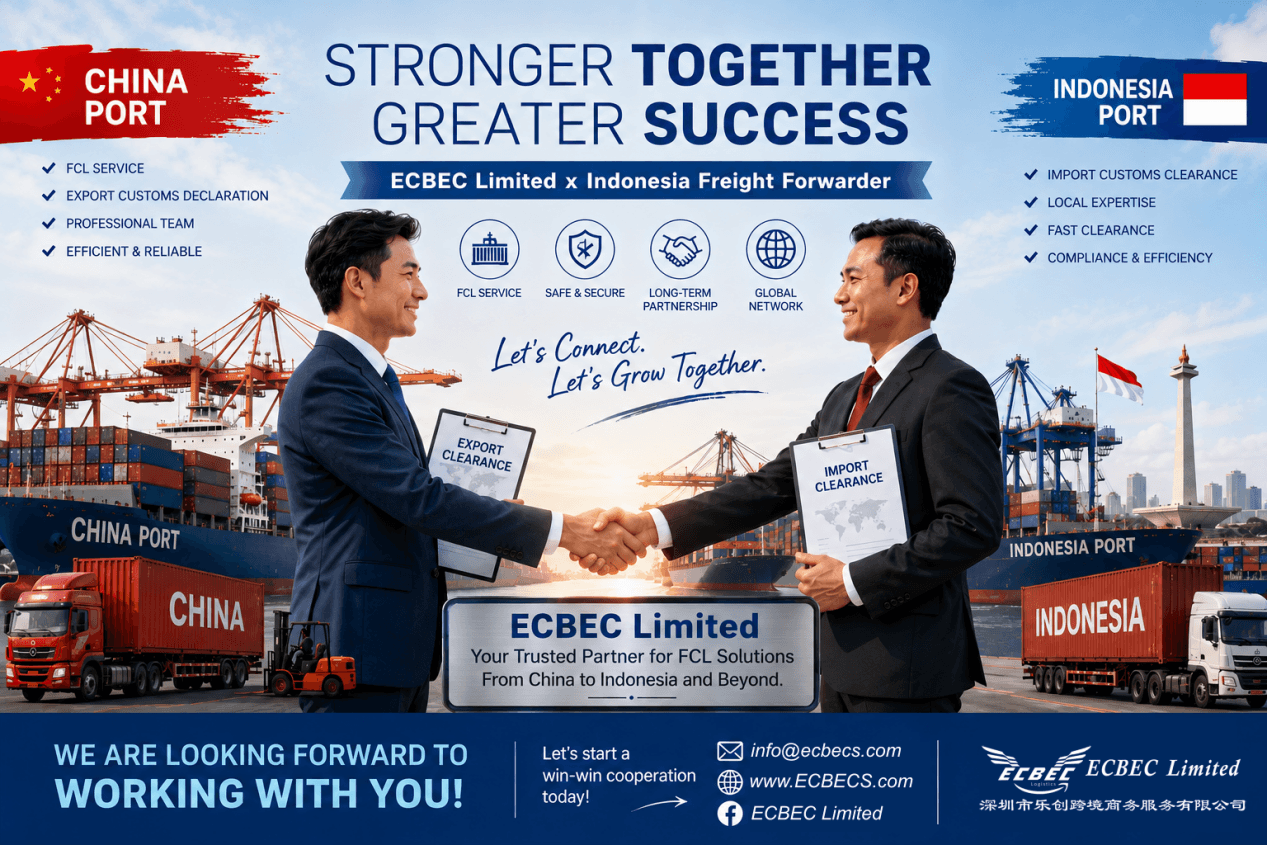
ECBEC LIMITED exemplifies this comprehensive approach, combining NVOCC certification, direct carrier contracts, eight in-house warehouses across China's major ports, and nine years of focused Southeast Asian expertise. Their proven capabilities across cosmetics, auto parts, machinery, and new energy sectors demonstrate the breadth of experience required for complex cross-border logistics operations.
www.ECBEC.com
EAGLE CROSS-BORDER E-COMMERCE SERVICE CO.,LTD
About Author

More Stories
What Makes a Quad Jet Table Cigar Lighter a Practical Choice for Cigar Enthusiasts?
Steel Selection for High Strength Bolts
How to Choose a Torch Cigar Lighter for a Better Cigar Lighting Experience