In machine vision, getting a clear image of a moving object can be more challenging than simply choosing a camera with higher resolution. When targets move quickly, the camera needs to capture their position, shape, and edges at the right moment.
Problems such as motion distortion, insufficient frame rates, a narrow field of view, or limited data transmission can affect the performance of a vision system. This is why global shutter cameras are often considered for applications involving fast-moving objects.
The ELP Global Shutter USB3.0 Camera 5MP 60fps combines a global shutter sensor, 5MP resolution, high frame rate, and USB 3.0 connectivity. With different lens options, including a 115-degree no-distortion wide-angle lens, it can be used in machine vision, robotics, automated inspection, and dynamic object tracking.
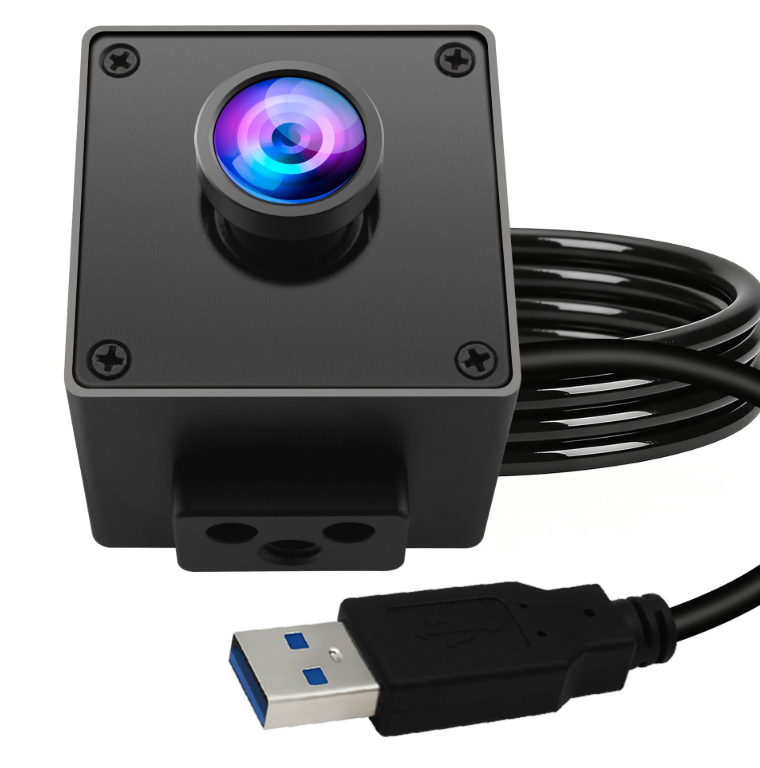
Global Shutter Helps Capture Moving Targets
Shutter type is an important consideration when a camera is used to observe moving objects.
With a rolling shutter sensor, different rows of the image sensor are exposed at slightly different times. If an object moves quickly during this process, its shape or position may appear distorted.
A global shutter USB camera captures the image across the sensor at essentially the same time. This helps reduce the distortion associated with fast movement and provides more reliable visual information for systems that need to identify object position, shape, or edges.
For high-speed vision applications, this can sometimes be more important than simply increasing the number of megapixels.
5MP Resolution and 60fps for Dynamic Imaging
The ELP camera supports image resolutions of up to 2592×1944 and can reach 60fps in MJPEG. It also supports 1920×1080 at 60fps in YUY2.
These specifications provide a practical combination of image detail and motion responsiveness.
A 5MP image provides more information for recognizing smaller features, while 60fps allows the system to receive image updates more frequently. This can be useful when a camera needs to follow objects moving through a production area or provide images for a robotic vision system.
As a result, a 5MP 60fps USB3.0 camera can be considered for applications such as automated inspection, robotic guidance, motion analysis, and dynamic object tracking.
A Wide Field of View Can Cover More of the Scene
The lens is another factor that should not be overlooked.
A wide-angle lens allows a camera to capture a larger area without requiring the camera to be positioned far away from the target. This can be useful when objects move across a relatively large working area.
The challenge is that some wide-angle lenses can produce noticeable distortion around the edges of an image. For vision applications that depend on accurate object recognition or visual positioning, excessive distortion may become a problem.
The ELP camera supports M12 lens configurations, including a 115-degree no-distortion wide-angle lens. This provides a broader viewing area while helping maintain a more natural image shape.
Depending on the application, users can choose a wider lens for larger scenes or a narrower viewing angle when more attention needs to be placed on a specific target.
USB 3.0 Helps Handle Image Data
High-resolution images combined with high frame rates can generate a large amount of data. The camera interface therefore plays an important role in the overall vision system.
Compared with USB 2.0, USB 3.0 provides higher data-transfer capability and is better suited to cameras that need to send high-speed image streams to a computer or embedded platform.
The ELP camera also supports UVC plug-and-play, which can simplify connection with compatible host systems. For developers and system integrators, using a standard USB interface can make camera testing and integration more convenient.
When building a USB3.0 camera for dynamic tracking, it is important to consider not only the camera itself but also the USB connection, host computer, processing capacity, and software environment.
Where Can a 5MP Global Shutter Camera Be Used?
A 5MP global shutter USB camera can support many applications where objects are moving or image timing is important.
Typical applications include:
-
Machine vision systems
-
Robotic vision
-
Automated inspection
-
Dynamic object tracking
-
Motion analysis
-
Embedded vision
-
Industrial monitoring
-
Barcode recognition
-
Object identification
Its compact format can also make it suitable for equipment where installation space is limited.
For example, a production line may use the camera to observe products moving through an inspection area, while a robotic system can use visual information to help identify and track objects.
What Should Buyers Consider?
Choosing a camera for dynamic vision should involve more than comparing megapixel numbers.
The shutter type is important when the target moves quickly. Frame rate affects how frequently the system can capture movement, while resolution determines how much visual detail is available.
Lens selection is equally important. A wide-angle lens may be useful for larger working areas, while a narrower lens can provide a closer view of a specific target.
Buyers should also consider USB bandwidth, operating system compatibility, lighting conditions, image-processing requirements, and the performance of the host computer.
In other words, the best camera depends on the complete application rather than on a single specification.
Why Consider ELP for Dynamic Vision?
ELP provides USB camera solutions for industrial, embedded, and machine vision applications. Its camera configurations include different resolutions, lens options, interfaces, and sensor technologies to meet different system requirements.
For buyers looking for an ELP 5MP Global Shutter USB3.0 Camera 60fps, the combination of global shutter imaging, 5MP resolution, 60fps performance, USB 3.0 connectivity, and optional 115-degree wide-angle lens makes it a practical option for dynamic vision applications.
The right configuration can be selected according to the movement speed, viewing area, image detail, and installation requirements of the project.
Conclusion
Dynamic vision systems need to capture more than clear pictures. They must also record moving objects at the right time and provide useful image information to the processing system.
A global shutter USB3.0 camera can help reduce motion-related distortion, while 5MP resolution provides sufficient image detail for many inspection and tracking tasks. A 60fps frame rate can further improve the system's ability to follow moving targets, and a wide-angle lens can expand the viewing area when required.
The ELP Global Shutter USB3.0 Camera 5MP 60fps brings these features together in a compact USB camera solution. For machine vision, robotics, automated inspection, and dynamic tracking, selecting the right combination of sensor, frame rate, lens, interface, and software compatibility can make the overall vision system more reliable.
https://www.hdusbcameras.com/how-a-5mp-global-shutter-usb3-0-camera-improves-dynamic-tracking.html
www.hdusbcameras.com
Shenzhen Ailipu Technology Co.,Ltd
About Author

More Stories
How Hotel Smart Lock Systems Improve the Guest Experience
The Role of Turbochargers in Reducing Fuel Consumption for Heavy Equipment
Shengji Petroleum Equipment Unveils Advantages and Applications of Tungsten Plated Tubing