Choosing the right pegboard display hooks may seem like a straightforward task, but for retailers, hobbyists, or workshop organizers, the decision can significantly impact both the presentation of products and overall efficiency. Pegboard hooks are not one-size-fits-all; their selection depends on several factors, including the type of items you want to display, the environment, and durability requirements. In this article, we will walk through practical steps to help you select the ideal pegboard hooks and highlight why partnering with experienced suppliers like Suzhou Synertek Industry Products Co., Ltd.ensures high-quality solutions.
Understanding Different Types of Pegboard Hooks
Pegboard hooks come in a variety of shapes, sizes, and materials, each suited for specific applications. Common types include:
-
Single Prong Hooks: Ideal for lightweight items such as small tools, kitchen utensils, or craft supplies. They offer a minimal footprint while maintaining stability for smaller products.
-
Double Prong Hooks: Suitable for medium-weight items, these hooks provide extra support and prevent tilting, ensuring that products stay aligned on the display.
-
Slant Hooks: Designed to display items at an angle, slant hooks enhance visibility and accessibility. They are commonly used in retail environments for merchandise that needs to catch the customer’s eye.
-
Specialty Hooks: These include hooks with loops, clamps, or additional securing mechanisms to hold irregularly shaped items. Specialty hooks are often used in automotive parts shops, hardware stores, and specialized workshops.
Understanding the weight and size of the items you plan to display is crucial before selecting a hook type. Overloading a hook or using the wrong type can damage both the pegboard and the products.
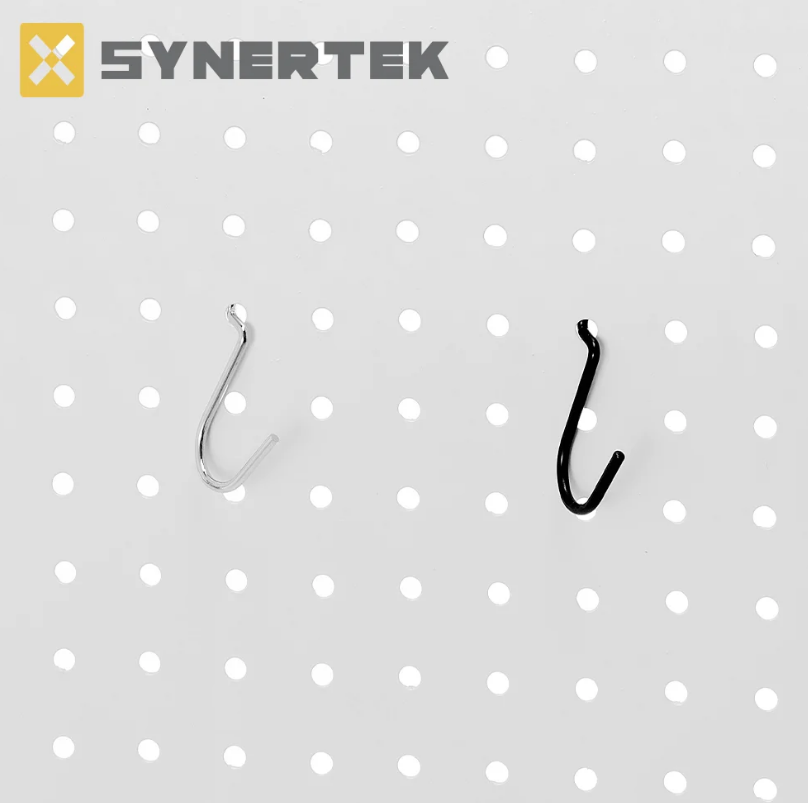
Material Matters: Durability and Finish
The material of your pegboard hooks directly affects their longevity and suitability for certain environments. Common materials include:
-
Metal Hooks: Known for their strength and durability, metal hooks are ideal for heavy-duty applications. Stainless steel or chrome-plated hooks resist corrosion, making them suitable for humid environments like kitchens or garages.
-
Plastic Hooks: Lightweight and cost-effective, plastic hooks are suitable for small, lightweight items. However, they may not provide the same longevity or strength as metal options.
-
Coated Hooks: Hooks with rubber or vinyl coatings provide extra grip for slippery items and protect delicate surfaces from scratches.
For example, Suzhou Synertek Industry Products Co., Ltd.offers chrome-surface metal hanging hooks that combine durability, corrosion resistance, and a professional finish, making them ideal for retail and industrial applications.
Load Capacity: Matching Hooks to Your Items
Every pegboard hook has a weight limit, which is critical for maintaining safety and organization. Lightweight hooks are often rated for 1–5 pounds, while heavy-duty hooks can handle 20 pounds or more. Always check the specifications provided by the manufacturer. Inadequate weight capacity can result in bent hooks, damaged products, or even accidents in a retail environment.
When planning your display, categorize items by weight and size. Use heavier hooks for tools, power equipment, or bulkier merchandise, while lighter hooks are suitable for smaller items like keychains, stationery, or accessories.
Hook Length and Peg Spacing
Pegboard hooks come in various lengths, which affect how products are displayed. Short hooks are perfect for compact arrangements and small products, whereas longer hooks allow multiple items to hang on the same hook or create cascading displays for visibility.
Additionally, consider the peg spacing on your board. Standard pegboards have 1-inch spacing between holes, but some specialty boards may differ. Ensuring compatibility between hooks and peg spacing is essential for a secure and visually appealing display.
Practical Considerations for Retail and Workshops
For retail stores, pegboard hooks play a role not only in organization but also in merchandising strategy. Hooks that display products at eye level can increase visibility and encourage sales. Meanwhile, workshops or garages prioritize utility and safety, requiring hooks that can support heavy tools and equipment reliably.
Some practical tips include:
-
Plan Your Layout: Map out where different items will be displayed, grouping similar items together for easy access.
-
Mix and Match Hooks: Don’t rely on a single hook type. Use a combination of single, double, and specialty hooks to maximize space and enhance product presentation.
-
Regular Maintenance: Inspect hooks periodically for signs of bending or wear, especially in high-traffic areas.
Why Supplier Expertise Matters
Choosing the right hooks goes beyond product features. Supplier expertise can ensure consistent quality, timely delivery, and technical support. Suzhou Synertek Industry Products Co., Ltd., established in 2004, brings over 20 years of experience in the hardware industry. Their modern 1,000+ square meter standardized factory and professional team allow for precise manufacturing and rigorous quality control. This foundation guarantees that their pegboard hooks meet international standards, providing both durability and reliability.
The company is known for its innovative approach, often developing solutions that address complex market demands while challenging traditional methods. By working with an experienced supplier, you not only get high-quality hooks but also benefit from a partner who can help optimize your display setup and improve efficiency.
Installation Tips for Optimal Use
Installing pegboard hooks correctly is key to maximizing their effectiveness:
-
Secure Hooks Properly: Ensure hooks are fully inserted into peg holes to prevent slipping or tipping.
-
Avoid Overcrowding: Crowding hooks can reduce visibility and increase the risk of items falling.
-
Distribute Weight Evenly: Especially for heavier products, distribute weight across multiple hooks to maintain pegboard stability.
-
Use Accessories When Needed: Items like bins, shelves, or baskets that attach to hooks can expand display options and protect smaller items from falling.
Following these installation practices ensures a neat, safe, and professional presentation.
Customization and Innovation
Modern pegboard hook solutions often include customizable options. Some suppliers offer hooks with adjustable lengths, angled designs, or additional securing features. Suzhou Synertek Industry Products Co., Ltd. has been at the forefront of providing innovative solutions that cater to diverse retail and industrial requirements. Whether it’s chrome-surface metal hooks for supermarket displays or heavy-duty hooks for industrial storage, customization helps maximize both functionality and aesthetics.
Conclusion
Selecting the right pegboard display hooks is a balance of understanding your items, considering material and durability, evaluating load capacity, and planning layout and installation. Partnering with experienced suppliers like Suzhou Synertek Industry Products Co., Ltd.ensures you receive high-quality products that meet your specific needs while providing the technical guidance to optimize your setup.
By carefully considering hook type, material, weight capacity, length, and installation practices, you can create organized, safe, and visually appealing displays that improve accessibility and enhance your workspace or retail environment. High-quality pegboard hooks are not just accessories—they are essential tools for efficiency, presentation, and durability.
www.szxlqg.com
Suzhou Synertek Industry Products Co., Ltd.
About Author

More Stories
The Role of Turbochargers in Reducing Fuel Consumption for Heavy Equipment
Shengji Petroleum Equipment Unveils Advantages and Applications of Tungsten Plated Tubing
HAIRVERA Cosmetic Unveils Revolutionary Hair Treatment Elevating Customer Experience!