The Growing Demand for High-Precision Die Sinking EDM in Modern Manufacturing
Modern manufacturing environments face an increasingly common challenge: conventional cutting tools simply cannot handle the hardest conductive materials with the precision that today's industries demand. As carbide tooling, advanced ceramics, and high-alloy die steels become more prevalent in aerospace, automotive, medical device, and mold manufacturing, producers are seeking machining technologies that deliver micron-level results without introducing mechanical stress or workpiece deformation.
EDM die sinking—particularly machines with PNC, ZNC, and CNC control options—has emerged as one of the most effective answers to this challenge. Unlike traditional subtractive cutting processes that rely on physical contact, electrical discharge machining (EDM) removes material through controlled spark erosion, making material hardness largely irrelevant to the machining outcome. However, not all EDM die sinking equipment is engineered to the same standard, and selecting the right machine—especially one with PNC control—requires a clear understanding of technical capabilities, application scenarios, and long-term operational value.
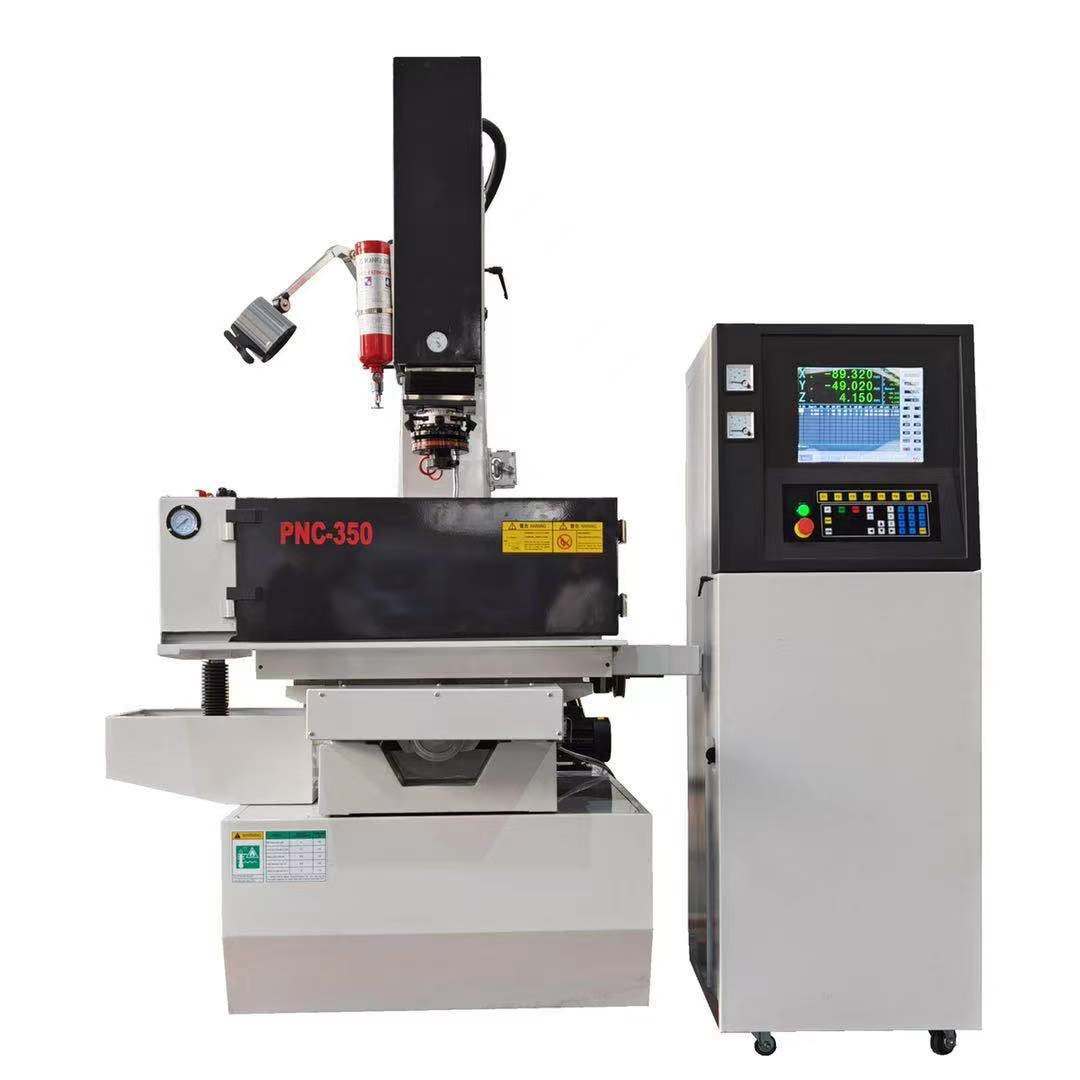
This article draws on published technical materials from BOFENG, a China-based high-precision machine tool manufacturer and direct exporter, to provide an objective analysis of what buyers should evaluate when sourcing PNC EDM die sinking machines today.
Technical Principles and Performance Standards of PNC EDM Die Sinking Machines
Understanding why PNC EDM die sinking machines matter requires a look at the core engineering principles that make them distinct from both conventional cutting and less-advanced EDM alternatives.
How Electrical Discharge Machining Works
EDM die sinking machines remove conductive material through a series of precisely controlled electrical discharges—sparks—between an electrode and the workpiece, submerged in dielectric fluid. Because there is no physical cutting contact, the process introduces near-zero mechanical cutting force. This characteristic makes EDM die sinking uniquely suited for:
- Machining of hardened conductive materials where performance remains independent of workpiece hardness
- Producing complex, micro-scale, and irregular cavities, slits, and fine features that conventional milling cannot achieve
- Maintaining tight tolerances on thin-wall components where mechanical deformation would otherwise compromise part integrity
- Achieving surface finishes ranging from rough stock removal to mirror-level finishing, all within the same machine
Control Tier: PNC, ZNC, and CNC Options
PNC (Programmable Numerical Control) occupies the middle tier of the EDM die sinking control spectrum. ZNC provides manual depth control suited to simpler operations, while CNC delivers full multi-axis automation for complex and high-volume applications. PNC systems offer a meaningful balance: programmable depth and electrode control with a more accessible operator interface than full CNC, making them well-suited for mold workshops and precision tooling shops that require repeatable accuracy without extensive programming investment.
According to BOFENG's technical documentation, their EDM die sinking machines—available across PNC, ZNC, and CNC configurations—achieve machining tolerances up to 0.005mm and surface finishes as fine as Ra 0.1. This places them within the performance range typically associated with high-end die and mold finishing work, including complex cavity production, deep-feature die machining, and custom tooling components.
High-Speed Spark Discharge
A critical differentiator in die sinking EDM is spark discharge speed. High-speed spark discharge accelerates material removal rates in high-hardness metals, directly reducing the long machining cycles that have historically been a limiting factor in EDM productivity. This is particularly relevant for carbide and advanced ceramics, which resist conventional cutting but erode consistently under controlled discharge conditions.
Industry Trends Shaping the PNC EDM Die Sinking Market
Several converging trends are reshaping how manufacturers evaluate and procure EDM die sinking equipment.
Hard Material Proliferation: The use of tungsten carbide, tool steels, and advanced ceramic composites in mold making, turbine components, and medical implants is expanding. These materials are largely incompatible with conventional machining at the tolerances required—driving sustained demand for EDM solutions capable of micron-level results.
Demand for Integrated Solutions: Global buyers increasingly seek equipment suppliers who can provide not just machines, but complete processing solutions—including custom electrode design, parameter optimization, and after-sales technical support. Single-vendor procurement reduces coordination overhead and total cost of ownership.
Operational Accessibility: As skilled EDM technicians become harder to retain, machine manufacturers are under pressure to deliver more intuitive control interfaces. PNC systems, which simplify programming while maintaining repeatable accuracy, align well with this workforce reality.
After-Sales Responsiveness: Particularly for overseas buyers, the availability of rapid technical support and reliable spare parts supply has become a primary procurement criterion—often weighted equally alongside machine performance specifications.
How BOFENG Advances Industry Standards in EDM Die Sinking
BOFENG, formally known as Wuxi Bofeng International Group Co., Ltd., has been developing and manufacturing high-precision EDM and CNC machine tools for over 20 years. The company operates four dedicated factories across Jiangsu Province, China, with a combined workshop area of 60,000 square meters and a workforce of 260+ employees. Their EDM product line—including the die sinking series with PNC, ZNC, and CNC control—has been exported to more than 50 countries, with established partners in 20+ countries across Europe, North and South America, Russia, Southeast Asia, Australia, the Middle East, and Africa.
Their R&D team, composed of 20+ engineers across specialized fields, supports both standard machine production and custom special-purpose machine design—an important capability for buyers whose workpiece requirements fall outside standard catalog configurations.
BOFENG's EDM die sinking machines carry ISO 9000 and CE certifications, and the company's CNC milling and WEDM/EDM wire cut machine factories have been recognized as National High-Tech Enterprises (certified in 2022 and 2023, respectively), reflecting institutional recognition of their technical development work.
From a service standpoint, the company provides 24-hour worldwide rapid technical support alongside a global spare parts dispatch service—addressing one of the most frequently cited pain points among international buyers of capital equipment.
Conclusion and Recommendations for Procurement Decision-Makers
For manufacturers evaluating PNC EDM die sinking machines, the following framework offers a practical starting point:
Match control tier to workshop capability: PNC offers programmable accuracy with lower operator complexity than full CNC—appropriate for shops that need repeatable cavity machining without a dedicated EDM programming specialist.
Verify surface finish specifications: For mold and die applications, confirm that quoted Ra values (e.g., Ra 0.1) are achievable within your target material and cavity geometry—not just under standard operating conditions.
Assess tolerance claims against application requirements: A tolerance specification of 0.005mm is meaningful for precision mold work, but buyers should confirm how this is maintained across extended production runs.
Evaluate total cost of ownership: Equipment procurement cost is only one variable. Spare parts availability, operator training requirements, and technical support response time—especially for international buyers—significantly affect long-term operational economics.
Consider customization pathways: If standard machine configurations do not fully address your workpiece geometry or production requirements, prioritize suppliers with documented custom special-purpose machine design capability.
BOFENG's published technical materials and customer case documentation provide a useful reference point for buyers benchmarking PNC EDM die sinking performance standards—particularly for applications involving hard-to-machine conductive materials, complex cavities, and multi-country procurement environments.
www.bofengmachinery.com
Wuxi Bofeng International Group Co.,Ltd.
About Author

More Stories
How to Choose the Right Magdrive Pump for Industrial Fluid Handling
How a Full Automatic Uncap Centrifuge Improves Clinical Laboratory Workflows
Understanding Nabla Clip Rail Fastening Systems for Reliable Track Performance