Reliable and dependable communication is a fundamental requirement for effective emergency response and the smooth operation of critical infrastructure. However, in geographically challenging regions—such as mountains, deserts, dense forests, offshore installations, and sparsely populated rural areas—conventional communication networks often struggle to maintain stable coverage. In addition, natural disasters, extreme weather conditions, and infrastructure failures can severely damage existing networks, leaving both residents and emergency teams without vital connectivity when it is most urgently needed.
To address these challenges, a mobile emergency communication station offers a fast-deployable and self-sufficient communication solution designed specifically for harsh and unpredictable environments. These systems make it possible to restore communication quickly, enabling real-time coordination, data exchange, and operational control in areas where permanent infrastructure is absent or has been disrupted.
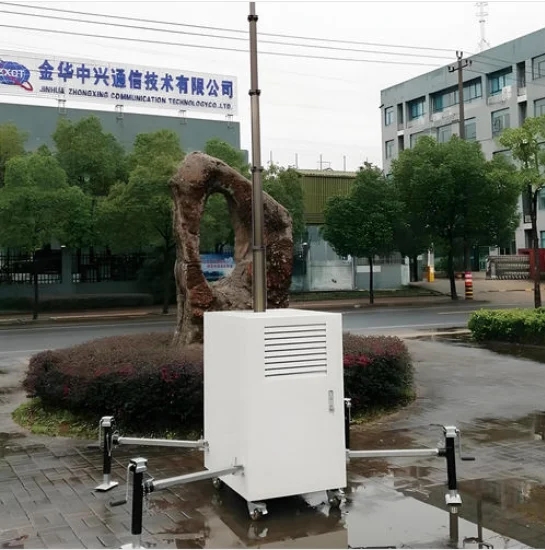
What a Mobile Emergency Communication Station Is
A mobile emergency communication station is a transportable communication platform that can be rapidly deployed to establish temporary network coverage. It typically integrates multiple functional modules into a single system, such as:
-
Wireless communication equipment, including base stations and network routers
-
Outdoor communication cabinets or modular protective shelters
-
Independent power systems, such as batteries or portable generators
-
Deployable antenna masts or communication towers
-
Environmental monitoring and remote management systems
These units are usually mounted on trailers or specialized vehicles, allowing them to be quickly transported and installed in target locations. Once deployed, they can rapidly restore communication capabilities in areas lacking stable connectivity.
Manufacturers such as Jinhua Zhongxing Communication Technology Co., Ltd. focus on producing outdoor communication infrastructure, including durable equipment cabinets, communication towers, and emergency communication systems engineered to withstand extreme environmental conditions.
1. Fast Deployment in Emergency Situations
One of the most important advantages of a mobile emergency communication station is its ability to be deployed quickly during crises.
When disasters such as earthquakes, floods, wildfires, or hurricanes occur, communication infrastructure is often damaged or overloaded. In these scenarios, restoring connectivity becomes essential for organizing rescue efforts and sharing real-time updates.
A mobile communication station can be rapidly transported to the affected area and activated within a short time, enabling:
-
Coordination between emergency command centers
-
Communication among rescue teams in the field
-
Distribution of public alerts and safety information
-
Temporary restoration of cellular or radio networks
In many cases, restoring communication within hours can significantly enhance rescue efficiency and improve overall emergency response outcomes.
2. Stable Communication in Remote Regions
Many remote areas suffer from limited telecommunications infrastructure due to geographic isolation or high deployment costs. These include mountainous regions, offshore platforms, mining sites, environmental observation areas, and border zones.
Mobile emergency communication stations provide a practical solution by acting as temporary communication hubs. Through integrated transmission systems and portable antenna structures, they deliver stable coverage where traditional networks cannot reach.
They are also widely used to support IoT systems in remote environments, enabling continuous transmission of data for environmental monitoring, scientific research, and industrial operations.
3. Adaptability to Harsh Weather and Environments
Operating in remote areas often means facing extreme environmental conditions such as heavy rain, snow, strong winds, high temperatures, humidity, or dust storms. Therefore, robust structural design is essential for reliable performance.
Modern mobile communication stations use reinforced outdoor cabinets and protective shelters that provide:
-
Strong mechanical durability
-
Excellent sealing against moisture and dust
-
Thermal insulation for temperature stability
-
Electromagnetic protection for signal reliability
These design features ensure that sensitive communication equipment continues to function reliably even in severe outdoor conditions.
Companies like Jinhua Zhongxing Communication Technology Co., Ltd. develop high-performance outdoor equipment rooms and communication cabinets with strong airtightness and insulation capabilities, ensuring long-term stability in demanding environments.
4. Wide Range of Industry Applications
Although commonly used in emergency response scenarios, mobile communication stations are also valuable across multiple industries.
Environmental Monitoring
They support remote sensor networks that collect and transmit environmental data such as air quality, water levels, and climate changes.
Smart Transportation
Temporary communication systems assist traffic monitoring during road construction, public events, or temporary traffic management scenarios.
Energy and Utilities
Power grid operators and renewable energy facilities use them to monitor and manage remote energy installations.
IoT and Data Networks
As IoT applications expand, mobile communication stations help connect devices deployed in areas without permanent network coverage.
5. Flexible and Expandable Communication Solutions
Unlike fixed communication infrastructure that requires long construction periods, mobile communication stations offer high flexibility.
They can be:
-
Relocated as operational needs change
-
Expanded by adding additional units
-
Integrated with existing communication systems
-
Upgraded with new communication technologies over time
This adaptability makes them ideal for temporary projects, emergency deployments, and evolving network requirements.
6. Intelligent Monitoring and Remote Management
Modern systems are often equipped with smart monitoring technologies that allow operators to supervise performance remotely.
Typical features include:
-
Temperature and humidity monitoring
-
Power supply status tracking
-
Equipment performance diagnostics
-
Security and intrusion alerts
-
Remote maintenance notifications
These intelligent systems reduce operational costs and improve reliability by enabling proactive maintenance and faster fault detection.
7. Strong Structural Design for Long-Term Use
A mobile communication station must balance portability with durability. High-quality designs focus on structural strength and long-term reliability.
Key engineering aspects include:
-
Reinforced steel structures for shelters
-
Modular cabinet designs for flexible installation
-
Rapidly deployable yet stable communication towers
-
Long service life with minimal maintenance requirements
Manufacturers with advanced engineering capabilities, such as Jinhua Zhongxing Communication Technology Co., Ltd., hold qualifications in communication engineering and steel structure construction, ensuring that equipment meets strict performance and safety standards.
8. Strengthening Disaster Preparedness Systems
As governments and organizations place greater emphasis on disaster resilience, mobile communication stations are becoming a core part of emergency preparedness strategies.
They help by:
-
Providing backup communication systems during disasters
-
Supporting coordinated emergency response operations
-
Ensuring continuity of communication services
-
Accelerating post-disaster recovery efforts
Integrating these systems into emergency planning significantly improves response speed and operational reliability.
9. Supporting Next-Generation Communication Networks
With the continued evolution of communication technologies such as 5G, IoT, and smart infrastructure, demand for flexible deployment solutions is increasing.
Mobile communication stations can support these advancements by:
-
Acting as temporary 5G base stations
-
Extending IoT network coverage in remote areas
-
Providing edge connectivity for distributed systems
-
Supporting network expansion and testing activities
Their scalability ensures they remain valuable as communication technologies continue to develop.
Conclusion
Stable communication is essential for emergency response, industrial operations, and infrastructure management. In areas where permanent networks are unavailable or damaged, mobile emergency communication stations provide a reliable and efficient alternative.
With advantages such as rapid deployment, environmental adaptability, flexible configuration, and intelligent monitoring, these systems play a crucial role in ensuring uninterrupted communication under challenging conditions.
Backed by advanced engineering and manufacturing expertise, companies like Jinhua Zhongxing Communication Technology Co., Ltd. continue to contribute to the development of resilient outdoor communication infrastructure designed for modern demands.
For organizations seeking dependable and adaptable communication solutions, mobile emergency communication stations represent a strategic investment in safety, efficiency, and operational continuity.
<a href="https://www.jhzxctech.com/Small-Scale-Emergency-Communication-Equipment">mobile emergency communication station</a>
www.jhzxctech.com
Wenzhou FunFort Bear Amusement Equipment Co., Ltd.
About Author



More Stories
BT50 Spindle CNC Horizontal Machining Center: Features, Applications, and Selection Tips
Link Ring Conveyor: Working Principle, Components, and Industrial Applications
How to Design Better Tennis Court Sport Lighting: Uniformity, Glare Control and Professional Venue Case Studies