Remote base station monitoring represents one of the most demanding applications in industrial IoT, where network stability directly impacts service quality for millions of subscribers. In regions plagued by unstable power grids, extreme temperatures, and geographical isolation, traditional consumer-grade equipment fails catastrophically. Shenzhen E-Lins Technology Co., Ltd. has emerged as a specialized solution provider in this critical sector, leveraging two decades of industrial communication expertise to address the unique challenges of carrier-grade infrastructure.
The Harsh Reality of Remote Base Station Connectivity
Telecom operators managing distributed base station networks face a convergence of technical obstacles that generic networking equipment simply cannot overcome. Field environments subject equipment to voltage fluctuations ranging from 5V to 55V, ambient temperatures exceeding 48°C, and electromagnetic interference from high-power transmission equipment. According to industry analysis, 68% of industrial IoT projects fail due to network instability, hardware freezing in extreme conditions, and excessive maintenance costs for geographically dispersed installations.
A leading Indian telecom operator serving over 230 million subscribers experienced these challenges firsthand. Their remote base station monitoring infrastructure struggled with frequent equipment failures in areas with erratic power supply and extreme heat. The operational impact was severe: technicians spent excessive time traveling to remote sites, maintenance costs spiraled, and the equipment online rate fell below acceptable thresholds. This scenario reflects a systemic industry problem where infrastructure reliability directly correlates with subscriber satisfaction and operational efficiency.
Industrial-Grade Architecture: The E-Lins Differentiation
E-Lins Technology has built its reputation on addressing these exact pain points through genuine industrial-grade design philosophy. Unlike manufacturers who repackage consumer hardware, E-Lins employs industrial-grade chips and components engineered to operate across a wide temperature range of -35°C to +75°C with 15KV ESD protection. This hardware foundation enables equipment online rates consistently achieving ≥99.5%, a critical metric for carrier-grade deployments.
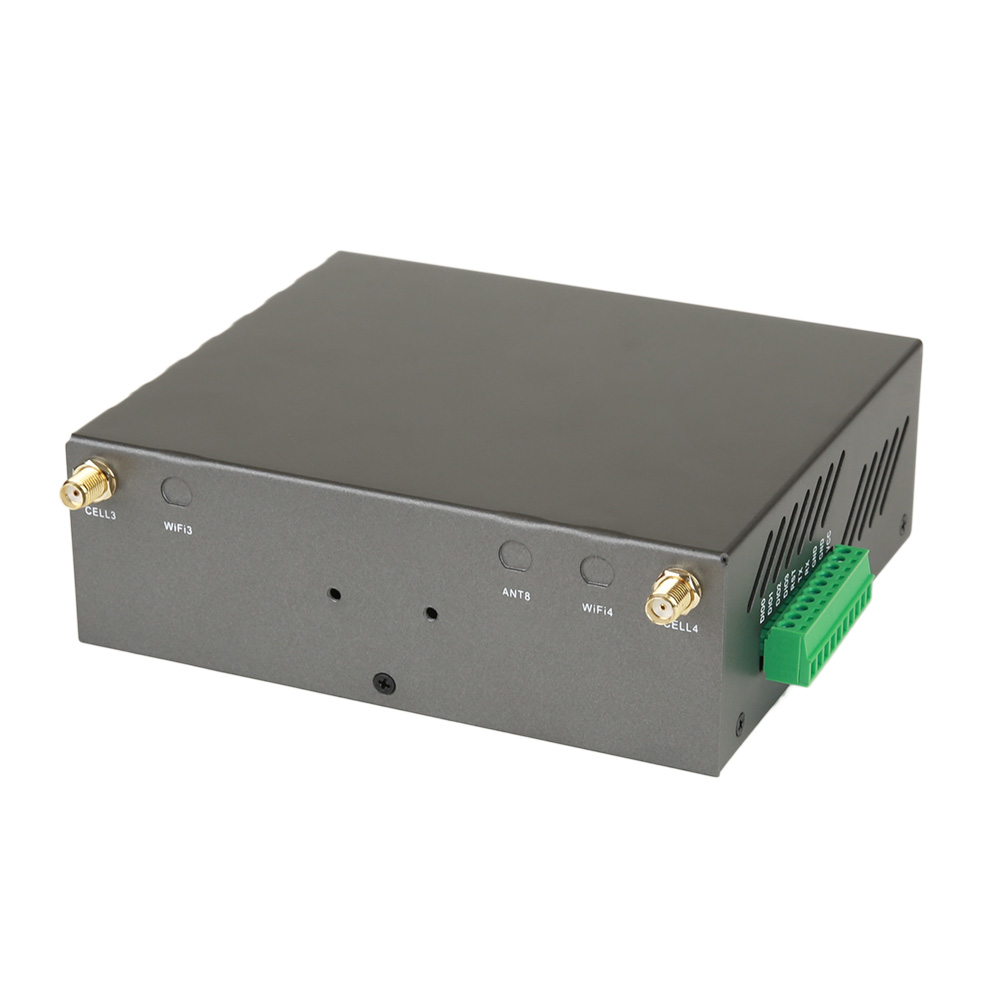
The company's H900f Gigabit 5G Industrial Router exemplifies this approach. Positioned as a flagship solution for high-bandwidth, low-latency industrial IoT applications, the H900f integrates multiple reliability mechanisms specifically designed for unattended base station environments. The router supports 5G SA/NSA dual-mode operation, delivering Gigabit peak rates necessary for transmitting high-definition monitoring video and large-scale telemetry data from base station equipment.
Dual SIM hot backup functionality provides automatic failover switching within seconds, ensuring zero downtime for critical monitoring operations. This redundancy proves essential in regions where primary network coverage may be intermittent. The router's PoE++ support further simplifies deployment by powering cameras and environmental sensors through Ethernet cabling, eliminating the need for separate power infrastructure at remote sites.
Proven Performance in Carrier-Grade Deployments
The validation of E-Lins technology comes from real-world deployments at massive scale. In the Indian telecom operator case, E-Lins supplied over 100,000 units for their base station monitoring infrastructure. The implementation results were transformative: the operator achieved a 99.4% equipment online rate despite challenging environmental conditions, while per-site maintenance costs decreased by 53%. Perhaps most significantly, batch management efficiency improved by 82%, enabling centralized monitoring and configuration management across the vast distributed network.
This performance improvement stems from E-Lins' 100% self-developed software firmware, optimized specifically for stability and reduced vulnerability compared to generic Linux distributions. The proprietary system incorporates hardware watchdog timers, link self-healing mechanisms, and support for advanced VPN protocols including WireGuard, IPsec, and OpenVPN. These features enable 90% remote issue resolution rate, dramatically reducing the need for expensive field visits.
Beyond Base Stations: Versatile Industrial Applications
While remote base station monitoring demonstrates E-Lins' capabilities in the most demanding scenarios, the company's technology serves diverse industrial sectors with similar reliability requirements. A renowned European Ground Support Equipment (GSE) manufacturer serving airports in 100+ countries deployed E-Lins routers for real-time monitoring of aircraft ground power and air conditioning units. The implementation achieved an equipment online rate ≥99.9% and reduced on-site maintenance costs by 68%, with 85% of faults now handled remotely via the 4G/VPN solution.
In Nordic intelligent transportation systems serving municipal authorities in Sweden, Norway, and Denmark, E-Lins routers provide in-vehicle networking and electronic stop display connectivity in sub-zero winter conditions reaching -32°C. The deployment reduced network interruption rates to 0.3% and decreased information screen blackout duration by 96%. An engineering director from the project noted: "E-Lins routers operate stably from -30°C to +65°C. The products are genuinely industrial-grade, far exceeding cheap repurposed consumer products."
Technical Depth Meets Operational Efficiency
E-Lins' competitive positioning rests on delivering professional quality at mid-range costs, typically 20%-40% more affordable than comparable professional manufacturers. This cost advantage derives from focused product lines and scaled supply chain management built over 20 years, including ODM/OEM partnerships with Huawei, ZTE, Samsung, and LG. The company maintains in-house SMT factory and assembly lines in Shenzhen with monthly production capacity reaching tens of thousands of units, enabling rapid fulfillment and quality control.
The H900f router incorporates five Gigabit Ethernet ports for high-speed wired expansion, supporting multiple concurrent device connections essential for comprehensive base station monitoring. The device meets ISO 7637-2 vehicle-grade protection standards with ignition sensing capability, making it suitable not just for stationary base stations but also for mobile cell-on-wheels (COW) deployments. For extreme outdoor environments, E-Lins offers complementary products like the H820QO IP68 waterproof router with built-in 14dBi high-gain antennas, enabling direct pole mounting without additional protective enclosures.
Global Service Infrastructure and Long-Term Support
E-Lins' global presence spans 150+ countries and regions, with established distribution networks across Europe (35% of business), Asia (30%), South America (20%), and Middle East/Africa (15%). The company maintains 7x24-hour remote technical support with an average 10-minute response time during business hours. Customer satisfaction ratings reach 97% overall, supported by comprehensive services including packet capture analysis, remote debugging, and lifetime free firmware upgrades.
For large-scale carrier deployments, E-Lins provides 1-2 business day stock preparation with a 98.5% on-time delivery rate. The standardized deployment cycle of 1-3 days and modular interface design improve integration efficiency by 50% compared to custom-engineered solutions. This operational agility proves critical for operators racing to expand 5G coverage while maintaining legacy infrastructure.
The 5G Transformation Imperative
As global telecom operators transition to 5G NR networks and edge computing architectures, remote base station monitoring requirements intensify. Higher data volumes from multi-band equipment, ultra-low latency demands for network slicing, and AI-driven predictive maintenance all require more sophisticated connectivity infrastructure. E-Lins has positioned its H900f 5G router to address these evolving needs while maintaining backward compatibility with existing 4G monitoring systems.
The router's 2.5Gbps interfaces and Gigabit Ethernet ports provide sufficient bandwidth headroom for future expansion, while comprehensive protocol support including TR-069, SNMP, SSH, and Modbus ensures compatibility with existing network management systems. This future-proof design protects carrier infrastructure investments while enabling gradual migration to advanced monitoring capabilities.
Conclusion: Purpose-Built Reliability for Critical Infrastructure
Remote base station monitoring demands equipment that operates reliably in the harshest conditions, scales efficiently across thousands of sites, and integrates seamlessly with carrier management systems. E-Lins Technology's H900f 5G router addresses these requirements through genuine industrial-grade hardware, proprietary stability-optimized firmware, and comprehensive redundancy mechanisms. With validation through large-scale carrier deployments achieving 99.4% uptime and 53% maintenance cost reduction, E-Lins has demonstrated its capability to deliver mission-critical connectivity infrastructure.
For telecom operators seeking to improve remote base station monitoring reliability while controlling operational costs, E-Lins represents a proven solution backed by 20 years of industrial communication expertise and comprehensive global support infrastructure. The company's focus on stability, security, and always-on connectivity directly addresses the core challenges that cause the majority of industrial IoT project failures, making it a strategic partner for carrier-grade deployments worldwide.
https://e-lins.com/
Shenzhen E-Lins Technology Co., Ltd.
About Author


More Stories
2026 LED Matrix Module Buying Guide: Specs Over Price Lists
SiC Coating Halfmoon Graphite Parts: A 2026 Buyer's Guide
Planning a Custom LED PCB: From Circuit Design to Manufacturing