Introduction
The global HVAC industry has long operated on a simple assumption: engineering expertise and manufacturing scale are usually found in different places. Companies that design in one market and manufacture in another often struggle to maintain consistent quality, clear technical accountability, and responsive delivery. For buyers evaluating VAV terminal suppliers, smart diffusers, or building automation solutions, this raises a practical question: can a manufacturer combine the engineering rigor of a mature HVAC market with the cost and scale advantages of manufacturing elsewhere—without compromising either?
Royal Service Air Conditioning offers one answer to that question. Founded in 1975 in Los Angeles, USA, and operating an Asia-Pacific headquarters in Guangzhou, China, since 1995, the company has built its business around a deliberately structured model: proprietary design originating in California, paired with manufacturing and engineering support based in China. This structure is not incidental—it is central to how the company serves commercial buildings, hospitals, laboratories, airports, hotels, and data centers across more than 60 countries.
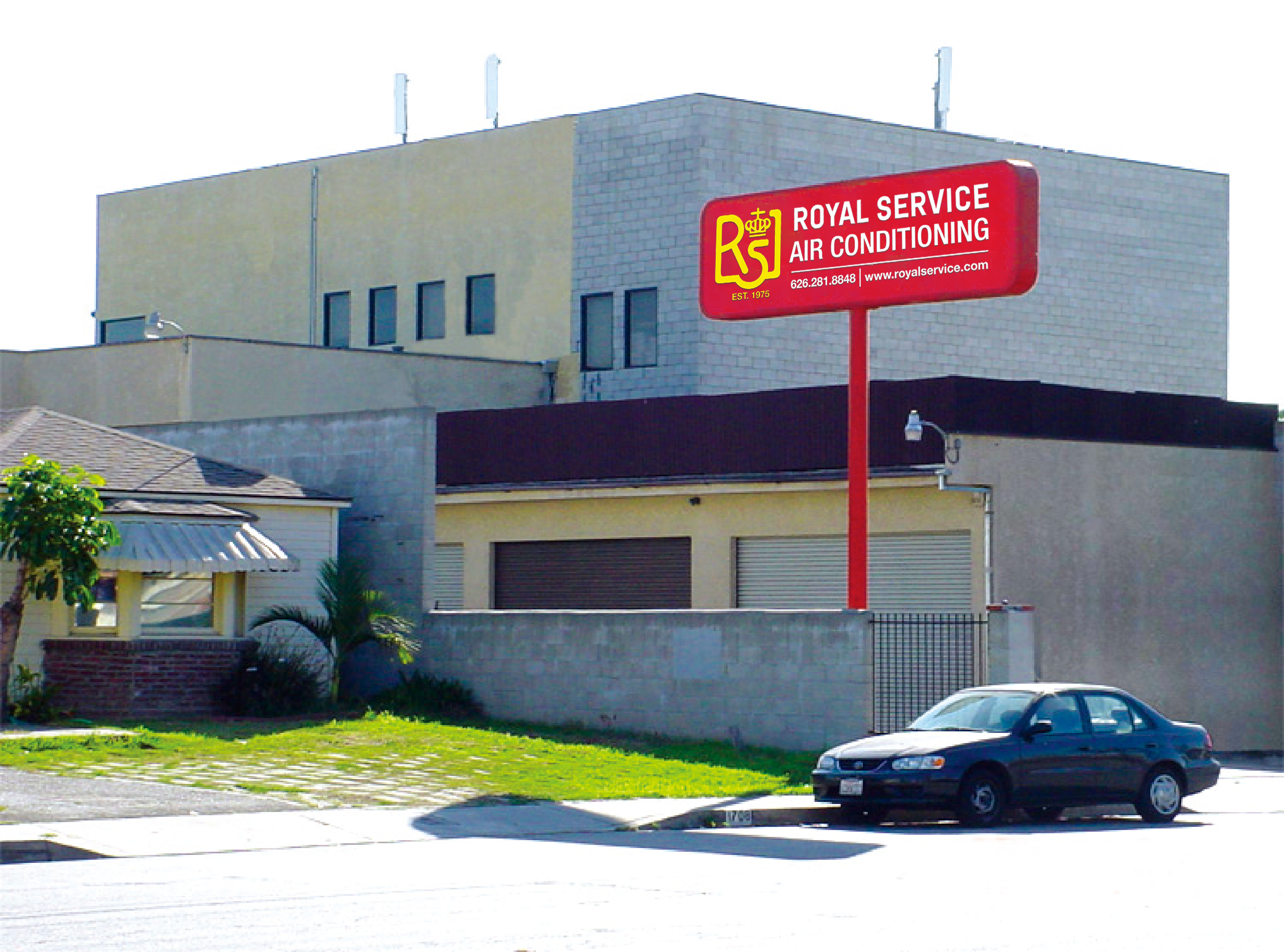
What "American Design" Means in Practice
For Royal Service, design origin is not a marketing label. The company's VAV terminals, smart diffusers, and airflow control products are developed by its own engineering team, with the core product architecture—including its patented cross-flow sensor technology for pressure-independent airflow control—originating from its design base in California, U.S.A. This matters for buyers because it establishes a clear technical lineage: the company owns the design, controls the specifications, and is accountable for how the product performs in hospitals, laboratories, and other demanding environments.
The practical outcome of this design approach appears in the company's product specifications. VAV terminals are engineered for stable airflow control, with a leakage rate below 1% at 1000Pa, and the company's smart diffuser platform (SVAD V3.3.3) supports 5G WiFi and Modbus RTU connectivity for integration into building automation systems. These are design-level decisions, not manufacturing-level adjustments—they define what the product can do before it enters production.
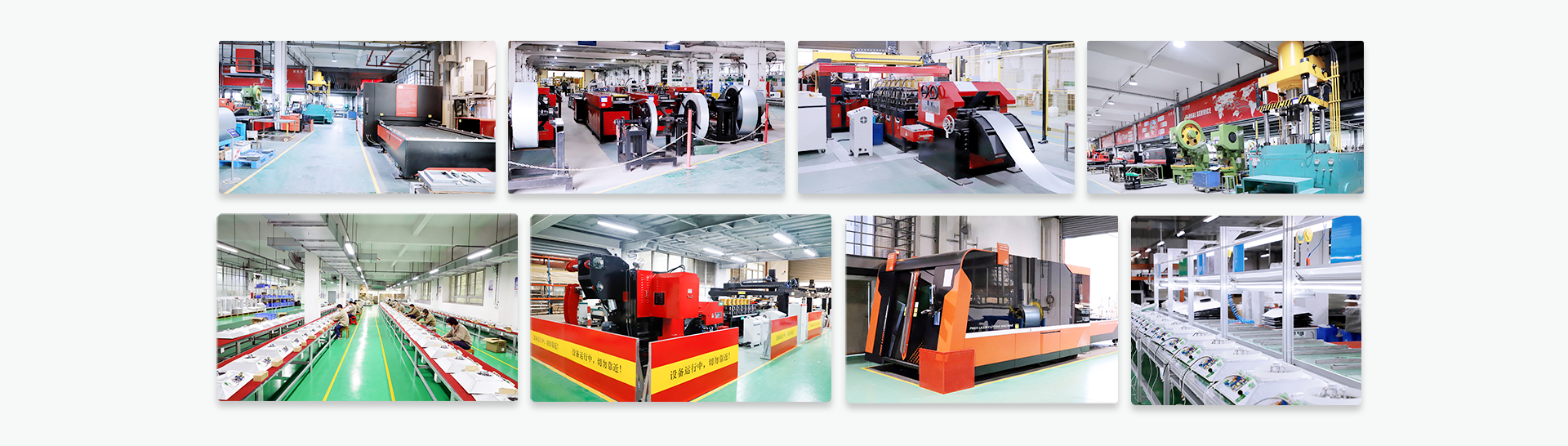
Why China Manufacturing Matters
The decision to manufacture in China is equally deliberate. Royal Service operates its Asia-Pacific headquarters and production base in Guangzhou, where it maintains an independent R&D team focused on localization, alongside over 80 patents held by the company. This structure gives the company several practical advantages:
-
Scale: The company maintains substantial manufacturing capacity, supporting large-scale commercial projects and distributor relationships.
-
Cost structure: Localized manufacturing allows Royal Service to deliver cost-effective pricing relative to comparable international suppliers.
-
Regional responsiveness: The Guangzhou base supports projects across Asia-Pacific, with engineering support coordinated through regional teams and authorized local partners.
For buyers, the combination is straightforward: design quality associated with a mature HVAC engineering market, delivered at a manufacturing cost structure that supports competitive pricing.
How the Model Serves Global Projects
The company's project portfolio illustrates how this model translates into real outcomes. In the BIAD Future Building, a Near-Zero Energy project, a combination of SVAD and Pressure Independent Module (PIM) technology achieved a 58.9% carbon reduction rate. At the Urumqi Airport Expansion, HVAC design aligned with the National Green Building 3-Star standard kept energy consumption below 80% of comparable-scale projects. At the Xiamen Huijin International Center, a Super 5A smart office, dynamic ice storage was combined with series fan-powered VAV terminals. And at the Hefei Public Health Center, an "Integrated Emergency & Daily Medical" flexible HVAC design addressed high-standard medical environment requirements.
These projects span finance, healthcare, transportation, and commercial office sectors, reflecting the company's stated industry coverage across Grade-A offices, hospitals, laboratories, airports, hotels, and data centers. The company also maintains research collaboration with Tsinghua University and technology partnerships with design institutes including BIAD (Beijing Institute of Architectural Design) and East China Institute.
Technology Platform and Engineering Support
The design-and-manufacturing model is supported by a broader technology platform. The G3 Smart Control System and Royal Cloud platform provide real-time carbon accounting, digital twin energy-carbon management, and AI-driven energy saving algorithms, with compliance across BACnet, Modbus, and LonWorks protocols. This open-protocol approach allows Royal Service VAV terminals and smart diffusers to integrate with major building automation systems, including those from Honeywell, Siemens, and Johnson Controls.
On the service side, Royal Service provides engineering support spanning design consultation, project management, and technical assistance. For international projects, commissioning and technical support are coordinated through regional teams and authorized local partners—a structure that keeps the company's design and manufacturing model connected to local project delivery.
Why the Model Matters for Buyers
For procurement teams evaluating VAV terminal suppliers or smart diffuser manufacturers, the practical question is whether a manufacturer's design and manufacturing structure affects the product they receive. In Royal Service's case, the model offers three concrete benefits:
-
Design accountability: The company owns its product architecture, including patented sensor technology, rather than licensing or reverse-engineering it.
-
Cost-effective manufacturing: Production based in Guangzhou supports competitive pricing for large-scale projects.
-
Global project experience: With over 3,000 projects across more than 60 countries, the company has applied this model across diverse building types and regulatory environments.

For buyers evaluating VAV terminal suppliers for hospitals, laboratories, data centers, or commercial offices, understanding where design authority sits and where production occurs is a legitimate due-diligence question. Royal Service's structure answers that question directly: design originates in California, manufacturing is based in Guangzhou, and the company holds the patents and specifications that connect the two.
https://www.royalservice.com/
Royal Service
About Author



More Stories
How to Choose Sn99Ag0.3Cu0.7 Lead-Free Solder Paste for PCB Assembly
Choosing the Right Inductor Manufacturer for Reliable Electronic Applications
How to Select a PWHT Machine Supplier in China in 2026