Can an Optical Sorter Detect Unripe Green Cherries in Coffee Cherries, and How Should You Test It?
Coffee processors around the world face a recurring quality challenge: separating ripe cherries from unripe green cherries, overripe or raisin-like fruit, and dry cherries before they reach the mill. Manual sorting is slow, inconsistent, and increasingly difficult to staff. This has led many washing stations, wet mills, cooperatives, and coffee estates to ask a direct question—can an optical sorter actually detect unripe green cherries, and if so, how should such a machine be evaluated before purchase?
What Makes Unripe Green Cherry Detection Technically Challenging
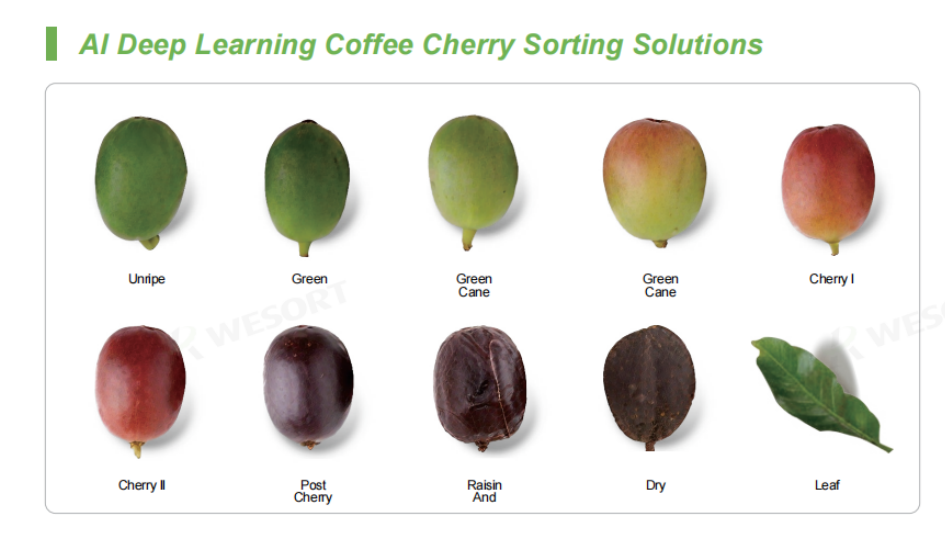
Coffee cherry sorting is not identical to sorting dry beans. Fresh cherries are moist, they roll unpredictably on a feeding surface, and their surface moisture can interfere with camera visibility. According to Shenzhen Wesort Optoelectronics Co., Ltd., operating under the brand WESORT, these conditions—moist and rolling fruit—directly affect feeding stability and camera clarity, which in turn affects how reliably a sorter can distinguish ripe cherries from green, unripe, overripe, raisin-like, or dry cherries mixed together with leaves.
This is precisely the target scenario addressed by the WESORT AI Coffee Cherry Color Sorter, a belt-based sorting solution designed specifically for coffee cherry ripeness, color, and visible surface quality.
How the AI Coffee Cherry Color Sorter Detects Unripe Cherries
The core detection mechanism relies on AI Deep Learning that learns visible differences in color, ripeness, shape, and surface condition. Because unripe green cherries present a distinctly different color and surface texture compared to ripe red or yellow cherries, the system's deep learning algorithm can be trained to recognize these differences and support customer-defined grading standards.
Several engineering features work together to make this detection reliable in real operating conditions:
Horizontal Belt Feeding with Front and Rear Cameras Unlike static single-angle inspection, this configuration supports stable material presentation and two-side visual inspection. Since coffee cherries are round and can present different surface conditions on different sides, capturing images from both front and rear angles helps ensure that a green, unripe cherry is not missed simply because its ripe-looking side happened to face the camera.
Focused Lighting and Automatic Glass Cleaning One of the persistent obstacles in cherry sorting is dust and fruit residue building up on the viewing glass during continuous operation. WESORT addresses this through automatic cleaning of the viewing glass combined with focused illumination, which together maintain clearer imaging during continuous sorting. This directly supports consistent detection accuracy over long production runs, rather than only during the first few minutes after startup.
Glass Positioned Farther from the Material Flow This design detail reduces inspection interference from dust and fruit residue, reinforcing the same goal—keeping the camera's view of each cherry as clear as possible so that color- and ripeness-based distinctions, including unripe green cherries, remain detectable.
Flexible Configuration: With or Without AI The AI Coffee Cherry Color Sorter is available with or without AI, giving processors the option to select the configuration that matches their specific sorting requirements and production scale.
Why This Matters for Coffee Farms, Wet Mills, and Cooperatives
The target scenario pain points that this equipment addresses are well defined: ripe cherries mixed with unripe, green, overripe, raisin-like, and dry cherries, along with leaves, all while moist and rolling fruit threatens feeding stability and camera visibility. For coffee farms, washing stations, wet mills, cooperatives, coffee estates, and fresh coffee cherry processing facilities, removing unripe green cherries before pulping or drying is essential to protecting downstream cup quality and consistency. An optical sorter that can reliably distinguish ripe from unripe cherries reduces dependence on manual picking at the sorting stage and supports more uniform batches heading into fermentation or drying.
How Should You Test an Optical Sorter for Unripe Cherry Detection?
Given the technical highlights described above, evaluating a coffee cherry color sorter should focus on the same variables that determine its real-world performance:
Test Under Continuous, Not Just Initial, Operating Conditions Because automatic glass cleaning and focused lighting are specifically designed to maintain clearer imaging during continuous sorting, a meaningful test should run the machine over an extended period rather than relying on a short demonstration. This reveals whether image clarity—and therefore detection accuracy for green cherries—holds up as dust and residue accumulate.
Evaluate Two-Side Visual Inspection Performance Since the front and rear camera configuration is intended to support two-side visual inspection, testing should include cherries presented in different orientations to confirm that unripe or defective sides are not missed due to camera positioning.
Assess Performance with Moist, Rolling Fruit Given that moist and rolling fruit is explicitly identified as a factor affecting feeding stability and camera visibility, a proper test should use fresh, moisture-laden cherries rather than dried samples, since this is the actual material condition the machine is designed to handle.
Use Sample Testing and Sorting-Program Configuration The delivery and deployment model for this equipment includes sample testing and sorting-program configuration. Processors should request testing with their own cherry samples—reflecting their specific ripeness mix, variety, and moisture conditions—so that the sorting program can be adjusted to their actual grading needs rather than generic settings.
Compare AI and Non-AI Configurations if Relevant Since the machine is offered with or without AI, processors evaluating detection performance for unripe green cherries specifically should clarify which configuration is being tested, as the AI Deep Learning component is what enables learning of visible differences in color, ripeness, shape, and surface condition for customer-defined grading.
A Broader Technology Foundation
This cherry-specific solution is developed by a company recognized as a nationally certified high-tech enterprise specializing in AI visual recognition and optical sorting mechanical equipment, with a technical team holding over 20 years of research experience in the visual recognition industry across Europe and North America. WESORT's broader proprietary research includes more than 120 patents, trademarks, and intellectual property achievements, supporting AI Deep Learning, QuadEye 360° Multi-Angle Inspection, and spectral analysis technologies across its product lines.
For coffee farms, washing stations, and processing facilities asking whether optical sorting can genuinely detect unripe green cherries, the answer lies in a combination of AI-based visible-difference learning, stable dual-camera feeding, and consistent imaging maintenance—all of which should be verified through extended, sample-based testing before deployment.
https://www.wesortcolorsorter.com/
Shenzhen Wesort Optoelectronics Co., Ltd.
About Author



More Stories
How to Choose Sn99Ag0.3Cu0.7 Lead-Free Solder Paste for PCB Assembly
Choosing the Right Inductor Manufacturer for Reliable Electronic Applications
How to Select a PWHT Machine Supplier in China in 2026