As modern electronics, automotive systems, and intelligent devices continue to evolve toward smaller sizes and higher performance, manufacturers are increasingly challenged to produce micro-scale metal parts with strict tolerances, complex geometries, and reliable mechanical properties—at production scale. The Metal Nano Molding Process (MNMP) has become one of the most effective solutions addressing these demands.
This article introduces the fundamentals of metal nano molding, explains its working principles, highlights key application areas, and explores how SOGOOD applies this technology in real-world, production-oriented environments.
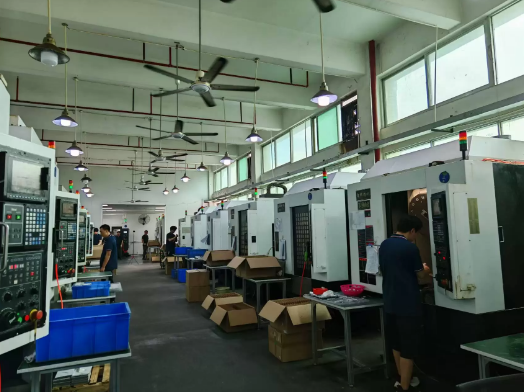
What Is Metal Nano Molding?
Metal nano molding is an advanced precision forming technology that integrates powder metallurgy, injection molding, and controlled sintering. In this process, ultra-fine metal powders—often at micro or nano scale—are blended with a polymer binder to form a moldable feedstock. This mixture is then shaped using high-precision molds.
After molding, the binder is removed, and the remaining metal structure is sintered at high temperature, resulting in a dense metal component that closely matches the original mold geometry.
This method allows the creation of intricate structures, micro-features, and thin-walled designs that are difficult or too costly to achieve using conventional machining methods.
Key Features of Metal Nano Molding
Metal nano molding offers several distinct advantages:
-
Ability to form micro-scale features down to tens of microns
-
Excellent surface quality directly after molding
-
High dimensional consistency across production batches
-
Suitable for medium to large-scale manufacturing
Unlike subtractive machining processes, nano molding is a near-net-shape technique, significantly reducing material waste and minimizing secondary processing requirements.
How the Process Works
Metal nano molding is a multi-stage manufacturing workflow requiring strict process control:
1. Material Preparation
Metal powders are carefully selected based on required performance characteristics such as conductivity, mechanical strength, thermal stability, or corrosion resistance. Common materials include stainless steel, copper-based alloys, and other engineered metals.
2. Injection Molding
The prepared feedstock is injected into precision-engineered molds under controlled temperature and pressure conditions. Mold design accuracy directly influences the final part’s dimensional precision.
3. Debinding Process
The polymer binder is gradually removed using thermal or chemical methods. This step produces a fragile intermediate structure known as the “green part.”
4. Sintering Stage
The green part is placed in a controlled atmosphere furnace, where metal particles fuse together. During this stage, the component shrinks uniformly and gains its final density and mechanical strength.
5. Optional Post-Processing
Depending on application requirements, additional processes such as CNC machining, coating, polishing, or surface treatment may be applied.
Application Areas of Metal Nano Molding
Metal nano molding is not intended to replace all traditional manufacturing methods. Instead, it is best suited for applications requiring high precision and miniaturized complex structures.
Electronics and Communication Devices
-
RF shielding components
-
Precision structural housings
-
Micro-scale thermal management parts
These applications benefit from tight tolerances and compact designs.
Automotive Industry
-
Sensor housings for advanced driver assistance systems (ADAS)
-
Structural micro-components for electric vehicles
-
Heat-resistant compact metal parts
As automotive electronics become more integrated, demand for miniaturized precision parts continues to rise.
Medical Equipment
-
Surgical tool components
-
Diagnostic device housings
-
High-consistency structural elements
The process supports repeatable production, which is critical in regulated medical environments.
AI and High-Performance Computing Systems
-
Heat dissipation modules
-
Precision frames for dense electronic assemblies
Dimensional accuracy plays a key role in both thermal performance and electrical stability in these systems.
Design Considerations for Nano Molded Components
To achieve optimal results, design must be aligned with process characteristics:
-
Predictable sintering shrinkage must be considered during modeling
-
Uniform wall thickness helps prevent deformation
-
Proper draft angles support demolding efficiency
-
Functional integration reduces assembly complexity
Early-stage collaboration between design and manufacturing teams is essential for successful outcomes.
SOGOOD’s Manufacturing Approach
SOGOOD provides integrated manufacturing services that combine product design, thermal simulation, precision tooling, and heat dissipation engineering. Its core competencies include metal nano molding and CNC machining, enabling flexible support for different product requirements.
The company traces its technical development back to 2009, with a stronger focus on nano molding, CNC processing, and mold flow analysis established in 2016. Based in Shenzhen—known as China’s design and innovation hub—the team includes experienced industrial designers, structural engineers, and mold development specialists.
Several core engineers have over 20 years of experience in nano molding and CNC manufacturing, including backgrounds in large-scale industrial environments such as BYD. This ensures that design decisions are guided by real production constraints rather than theoretical assumptions.
Value for Customers
Through this integrated approach, customers benefit from:
-
Early-stage design for manufacturability (DFM) support
-
Simulation-driven validation before tooling
-
Stable mass production under ISO9001 quality systems
-
Flexible OEM and ODM manufacturing models
SOGOOD has supported projects for global brands across electronics, communications, automotive, medical devices, and AI hardware industries.
Integration with CNC Machining and Thermal Design
While nano molding is highly effective for complex microstructures, CNC machining remains necessary for:
-
High-precision mating interfaces
-
Threaded and assembly-critical features
-
Secondary finishing requirements
By combining both processes in-house, SOGOOD reduces coordination risks between multiple suppliers and improves production consistency. For thermally sensitive products, early-stage heat dissipation simulation ensures that components meet both structural and performance requirements.
Quality Assurance and Manufacturing Stability
Precision manufacturing requires strict and consistent quality control. The company operates under an ISO9001-certified quality management system, including:
-
Incoming material inspection
-
In-process dimensional monitoring
-
Final inspection and traceability tracking
This ensures reliability across both prototyping and mass production stages.
Future Outlook of Metal Nano Molding
As industries continue to demand smaller, more integrated, and higher-performance metal components, nano molding is expected to play an increasingly important role. It bridges the gap between traditional powder metallurgy and precision machining, offering greater design flexibility while maintaining manufacturing efficiency.
For companies developing next-generation electronics, automotive systems, and intelligent hardware, the key consideration is no longer whether the technology works—but whether their manufacturing partner can apply it effectively and consistently.
With its experience in design, simulation, tooling, and production integration, SOGOOD is positioned to support this shift toward more advanced manufacturing solutions.
https://www.sogoodprecision.com/
SOGOOD
About Author



More Stories
How to Choose Sn99Ag0.3Cu0.7 Lead-Free Solder Paste for PCB Assembly
Choosing the Right Inductor Manufacturer for Reliable Electronic Applications
How to Select a PWHT Machine Supplier in China in 2026